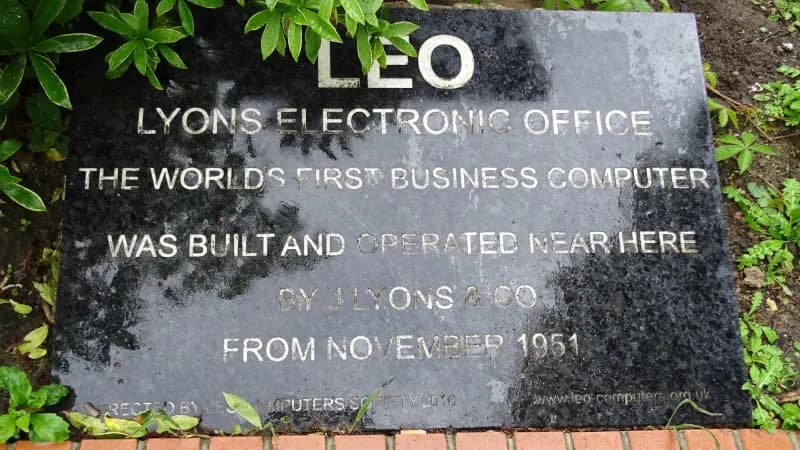
LEO, the world's first purpose-built electronic business computer, turns 75 this November. Built by J. Lyons and Company, a British food conglomerate behind cakes, tea shops, and national logistics, it was a direct commercial adaptation of Cambridge University's EDSAC. The Centre for Computing History is marking the anniversary with a dedicated event.
Lyons executives encountered ENIAC on a US trip, then found EDSAC closer to home and funded its commercialization as the Lyons Electronic Office. The resulting machine line ran through a full product series, with the final LEO still in active use by the British Post Office into the 1970s. The original article traces exactly how a biscuit company ended up defining the trajectory of business computing.
No surviving LEO exists in a museum, but the National Museum of Computing at Bletchley Park hosts a working EDSAC recreation, the closest physical artifact to LEO's origin. The anniversary event and that recreation together make this a rare moment to engage with a machine that is historically foundational but almost invisible in mainstream computing history.
[READ ORIGINAL →]