Texas Instruments had a bad quarter, and management admitted it will cut factory loading for several quarters to stop inventory from growing. The analog upcycle thesis is dead. TI guided to the low end of capex, signaling that the COVID-era capacity expansion may never be needed. The auto and industrial downturn has now run roughly twice as long as a typical cycle, and even the apparent green shoots in April were fake: Liberation Day tariff anxiety pulled demand forward, and the run rate underneath was actually lower.
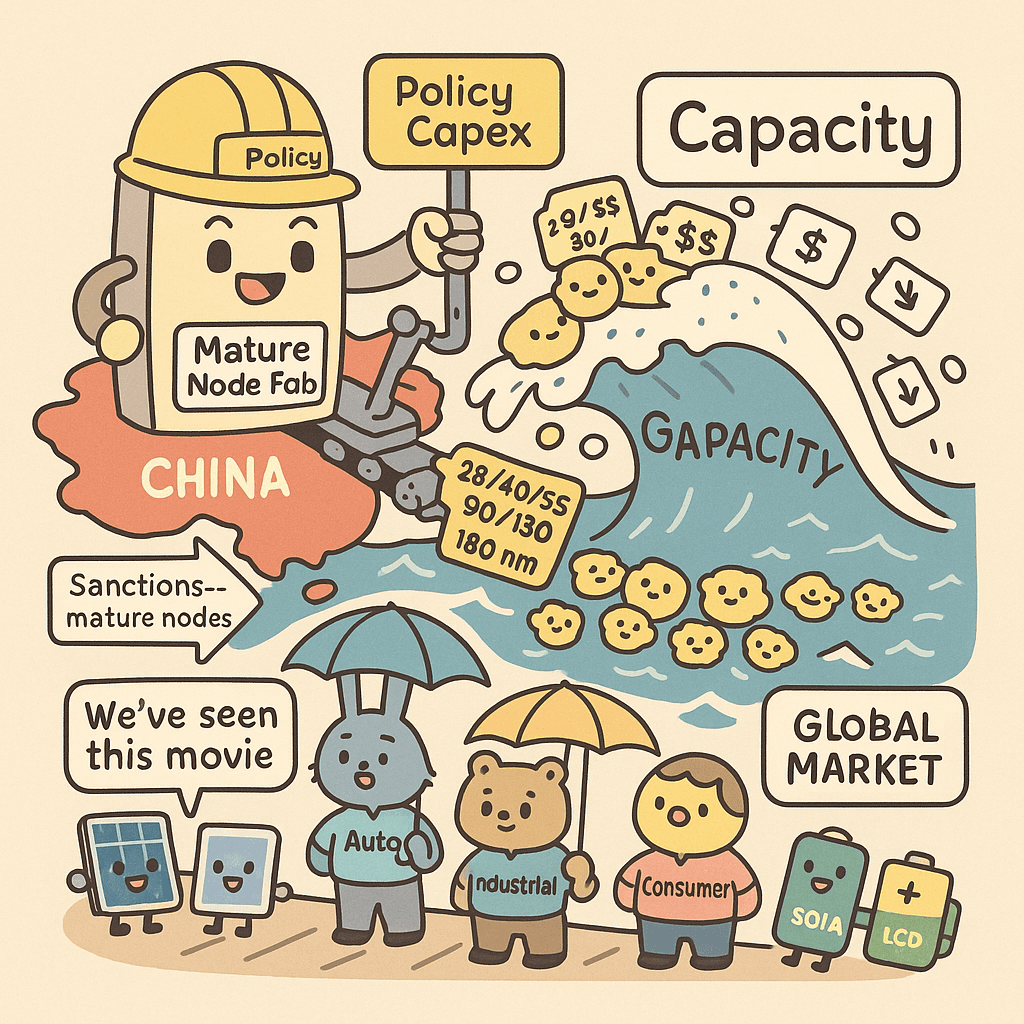
The deeper problem is structural, not cyclical. China has permanently inflated lagging-edge supply in the categories where TI competes. A new fab cannot profitably sell a chip at prices set by a fully depreciated Chinese fab. Even a 5% supply increase during an upturn is enough to destroy incumbent pricing power. Global utilization is still lackluster. The swing factor for any recovery is incremental Chinese demand, which is the worst possible variable to depend on.
Read the full piece for the original argument on why lagging-edge capacity now behaves differently from every prior cycle, the mechanics of how Chinese EV demand distorts the entire analog market, and why the next upturn, if it comes, will be muted and prolonged rather than a sharp recovery. The permanent glut framing is the key argument, and the supporting data on utilization and pricing makes it hard to dismiss.
[READ ORIGINAL →]