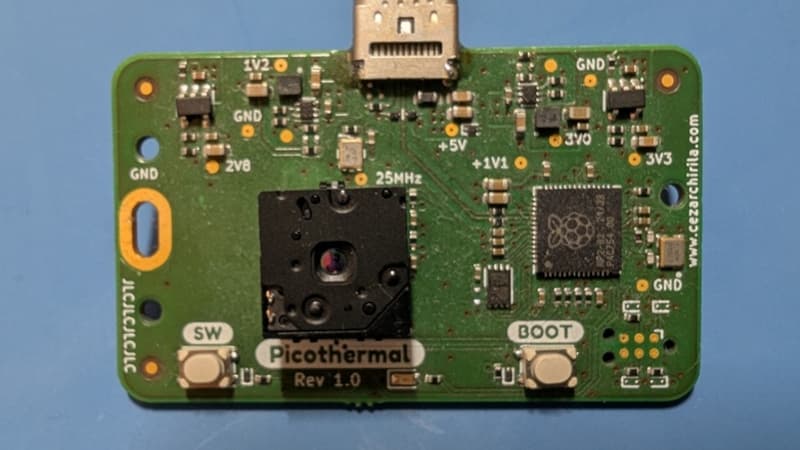
Cezar Chirila built a browser-native infrared camera by pairing a FLIR sensor with an RP2040 and routing all communication through WebUSB, bypassing companion apps entirely. The hardware is minimal: a power regulator and almost nothing else, because the USB host device handles the rest. Users open a landing page in any WebUSB-compatible browser and the camera works. Full source is on GitHub at icamaster/picothermal.
The architectural choice is the real story. Native apps rot. WebUSB, backed by browser vendors with no realistic deprecation path, does not. This project is a clean proof of concept that USB peripherals can ship with zero installed software and still maintain a credible long-term support story. The article also floats a sharper follow-up idea: store the HTML landing page itself on a small USB mass storage volume exposed by the microcontroller, making the device entirely self-contained.
Read the full piece for Chirila's circuit decisions and the specific tradeoffs of offloading processing to the host browser versus the RP2040. The broader implication, that WebUSB is an underused distribution channel for hardware projects, is worth sitting with.
[READ ORIGINAL →]