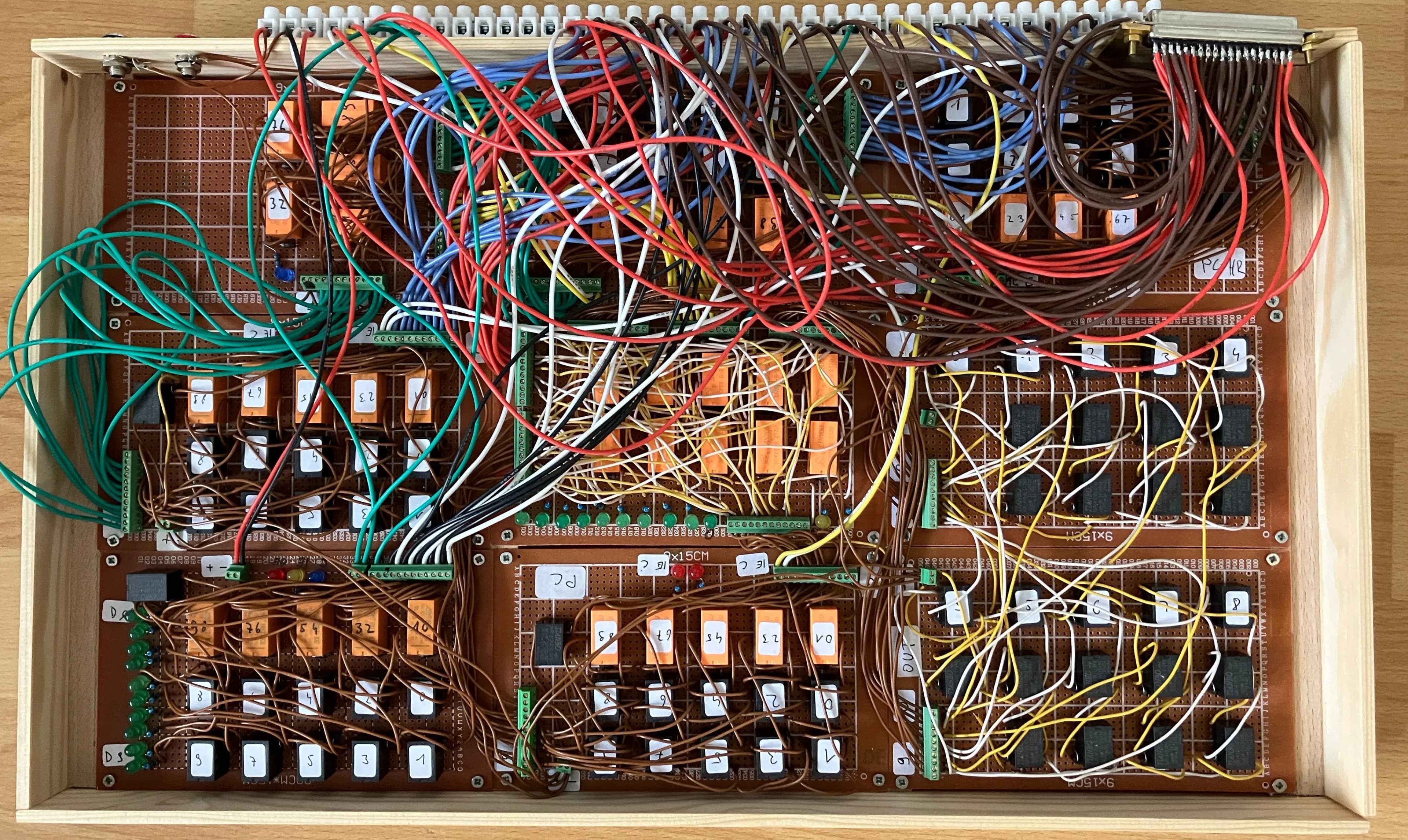
A hobbyist named Peter built a functioning 16-bit CPU out of electromechanical relays and entered it in Hackaday's 2026 Retrocomputing Challenge. The machine uses a single accumulator register (ACCU) for all math and memory operations, runs an instruction set of exactly 19 commands, and outputs to a 32x32 LED matrix display.
The benchmark: 3 digits of Pi, calculated in 8 minutes of continuous relay clicking. That number tells you everything about the performance envelope, and it is not the point. The point is that Peter's architecture, design choices, and the sheer mechanical audacity of running 16-bit logic through contact closures are what make the full project writeup worth your time. The machine's earlier form appeared in the 2025 One-Hertz Challenge, where it blinked a lamp. It has since grown into something considerably more serious.
The Hackaday Retrocomputing Challenge runs through October 27, 2026. The embedded video shows the Pi calculation in real time. Watch it, then read the full project page at hackaday.io to understand how Peter structured the ISA and why the accumulator-only approach is both a constraint and a deliberate architectural statement.
[READ ORIGINAL →]