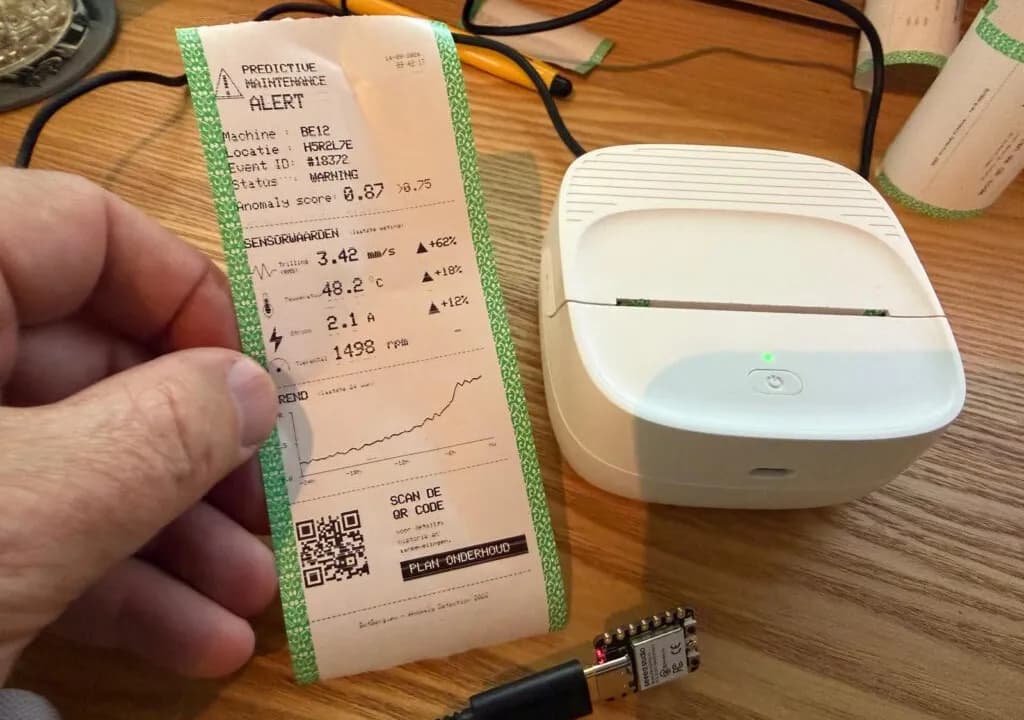
Bas BotBerg needed an ESP32-C3 to drive a portable Bluetooth thermal printer with no public documentation. Instead of the standard move, capturing BLE traffic from the manufacturer's Android app via Wireshark, he skipped the proprietary software entirely and probed the printer directly using Python and the Bleak library.
The method is the story. BotBerg queried the printer's BLE services, identified writable characteristics, and pushed raw data until the paper motor engaged. That first motor response was his proof of concept. From there he mapped commands in Python, then ported the working payloads to C++ on the ESP32-C3, adding the Adafruit GFX library for icon rendering and formatted output.
The code has not been released, but the reverse-engineering methodology documented here is reusable against any undocumented BLE peripheral. If you have a locked-down Bluetooth device and an MCU to drive it, this is the workflow to study.
[READ ORIGINAL →]