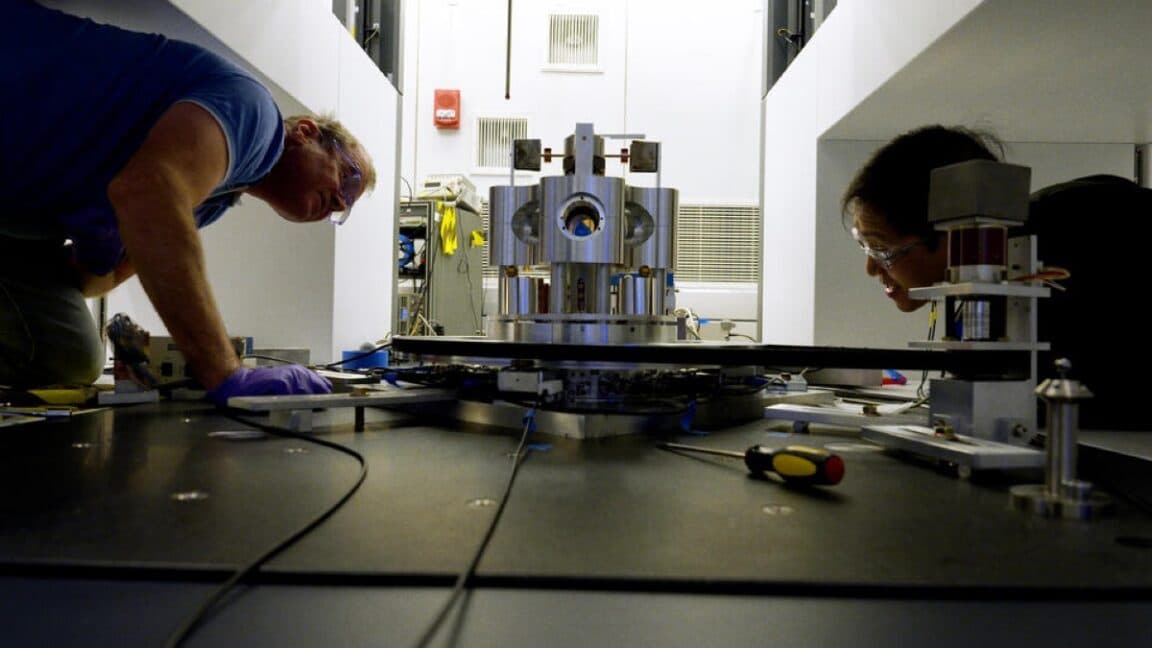
After a decade of work, NIST scientists have published new measurements of G, the gravitational constant, in the journal Metrologia. The result does not resolve the long-standing discrepancy. It adds one more data point to a problem that has frustrated metrologists for over 200 years.
The core issue is precision. Other fundamental constants are pinned down far more tightly. G remains an outlier, with experimental values differing by roughly one part in 10,000. The culprit is gravity's extreme weakness relative to the other three fundamental forces, which makes Earth's own gravitational field a persistent source of noise in any laboratory setting.
What makes the full paper worth reading is the methodology: NIST specifically chose to replicate one of the most divergent recent experimental results, not a consensus measurement. That framing matters. Understanding why independent, careful repetitions still disagree tells physicists more about systematic error than any single precise result would.
[READ ORIGINAL →]