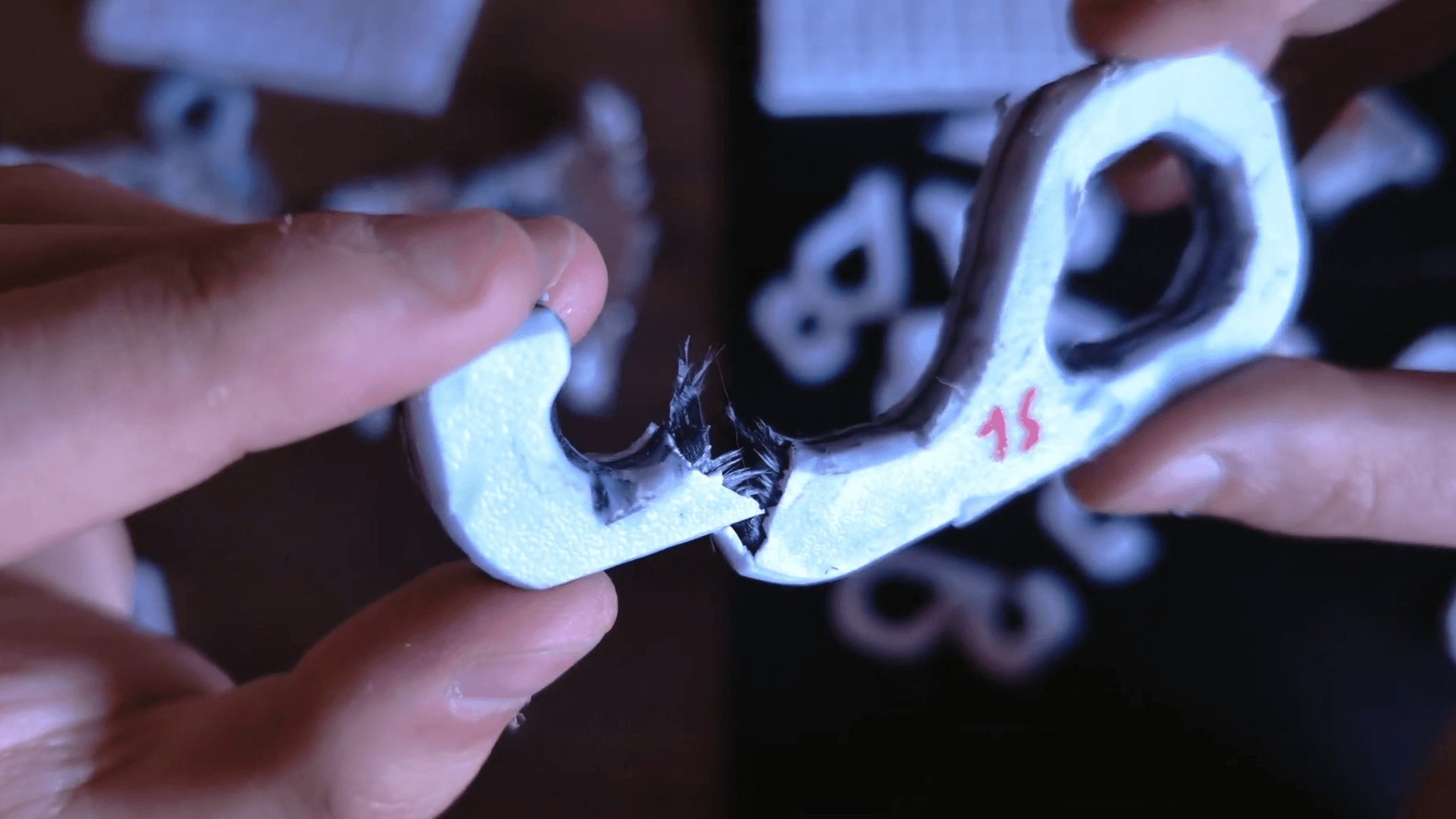
A maker called MagicLAG achieved a 336% increase in yield strength on FDM 3D-printed parts using a subsurface carbon-fiber cloth technique, no expensive continuous-fiber printer required. The method splits a part into three printed pieces: a core and two outer shells, with a deliberate gap between them. Carbon-fiber cloth is epoxied into that gap. Standard epoxy, not quick-setting, preserves dimensional accuracy.
The load cell hook tests are where this article earns a full read. Single-strand fiber embeddings, whether paused mid-print or ironed in post, showed zero measurable improvement. The fiber simply buckled inside the plastic. Shell-and-core assemblies without cloth outperformed solid prints, but the cloth composite more than tripled the baseline. That control group result alone reframes how much of the gain comes from the layered structure versus the fiber itself.
Two caveats matter here. Carbon-fiber-filled filaments can actively weaken PLA compared to plain plastic, so filament swaps are not a shortcut. Carbon fiber also carries documented asbestos-like health risks, making handling discipline non-optional for anyone replicating this at home.
[READ ORIGINAL →]