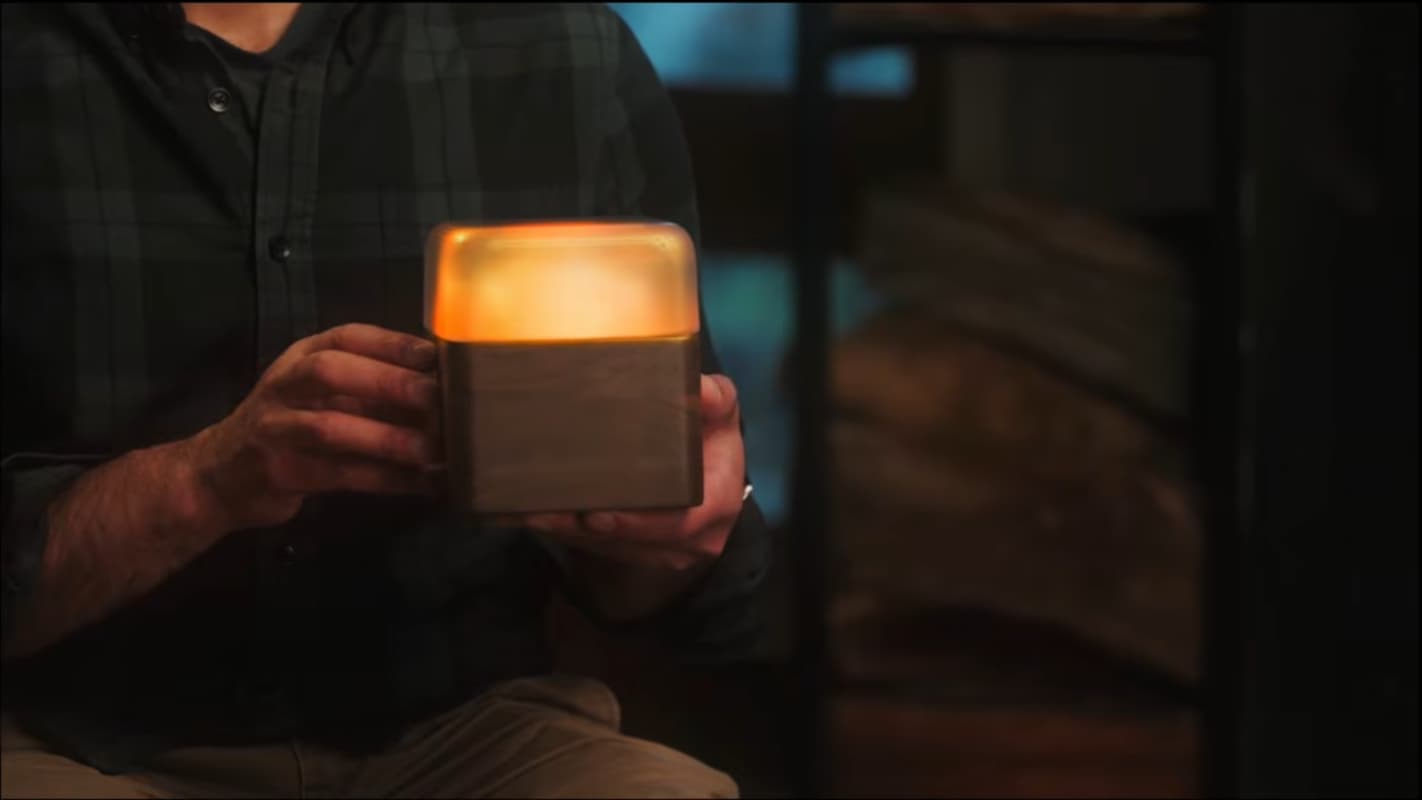
Creosote buildup, not an overheated fire, is what burns houses down. Reddit user nas886 built a system called Oru that addresses this directly: a probe mounted in the stovepipe feeds exhaust gas temperature data to an ESP32, which sends remote status alerts via a color-coded LED housed in a custom walnut enclosure. Too cold means incomplete combustion and creosote accumulation. Too hot means close the air intake. The LED tells you which problem you have without requiring you to sit next to the stove.
The engineering choices here are worth reading about in detail. The walnut enclosure is a deliberate product decision, not an aesthetic afterthought. nas886 already sold initial units and is moving toward wider production. The ESP32 handles remote notification, meaning the operator does not need line-of-sight to the stove. The system works across the full range of woodstove form factors, from small units requiring constant feeding to large units configured for all-night burns.
The original post links to nas886's production update and to a prior Hackaday writeup on an ESP8266-based stove monitor from December 2024, giving readers a replication path if they want to build rather than buy. The core question the full article raises is whether a sub-100-dollar DIY build can replace years of intuition about fire management. The answer appears to be mostly yes.
[READ ORIGINAL →]