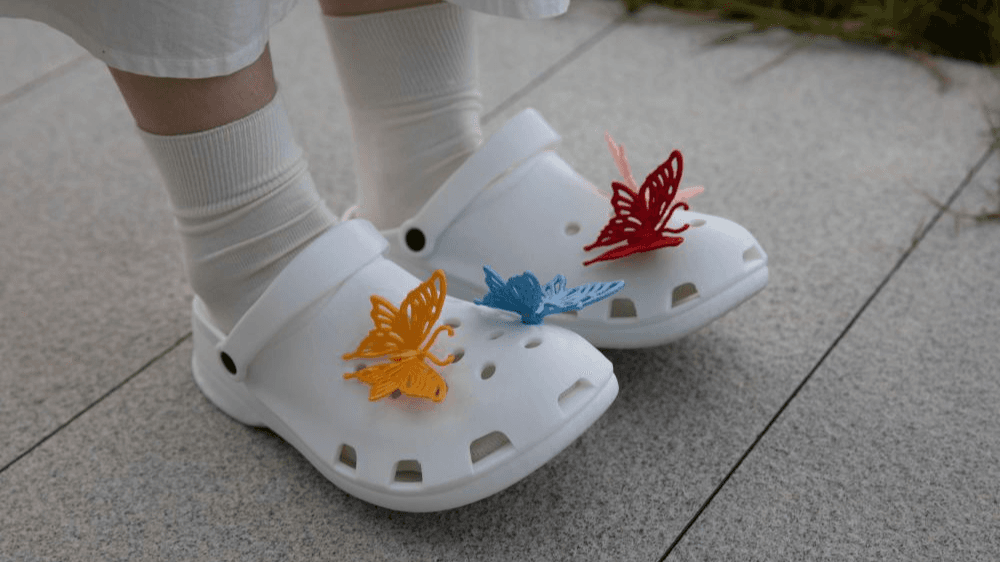
3D printing wearable clogs at home requires a multi-material printer, TPU 90A filament, and PLA supports. The guide from Snapmaker's blog lays out the full process, but the real value is its honest accounting of failure modes: large prints in flexible filament are expensive to get wrong, and most guides skip the hard parts.
The material pairing is where this gets technical. TPU 90A is the target hardness for the shoe body, but supports must peel clean. PLA is the correct support material. The guide mentions PETG as an alternative, but prior multi-material testing shows PETG bonds aggressively to flex filaments, making removal destructive. Beyond supports, TPU is moisture-sensitive enough to degrade print quality if not kept dry. Infill matters too: gyroid pattern at 15% density gives the right compression underfoot, and tuning the pattern beats tuning the density percentage.
The piece does not pretend this is cost-competitive with buying Crocs. It is not. What it is: a rare guide that documents the actual decision tree, including filament compatibility traps, moisture control, and build plate adhesion problems that show up after a successful print. Read it for the failure taxonomy, not just the final result.
[READ ORIGINAL →]