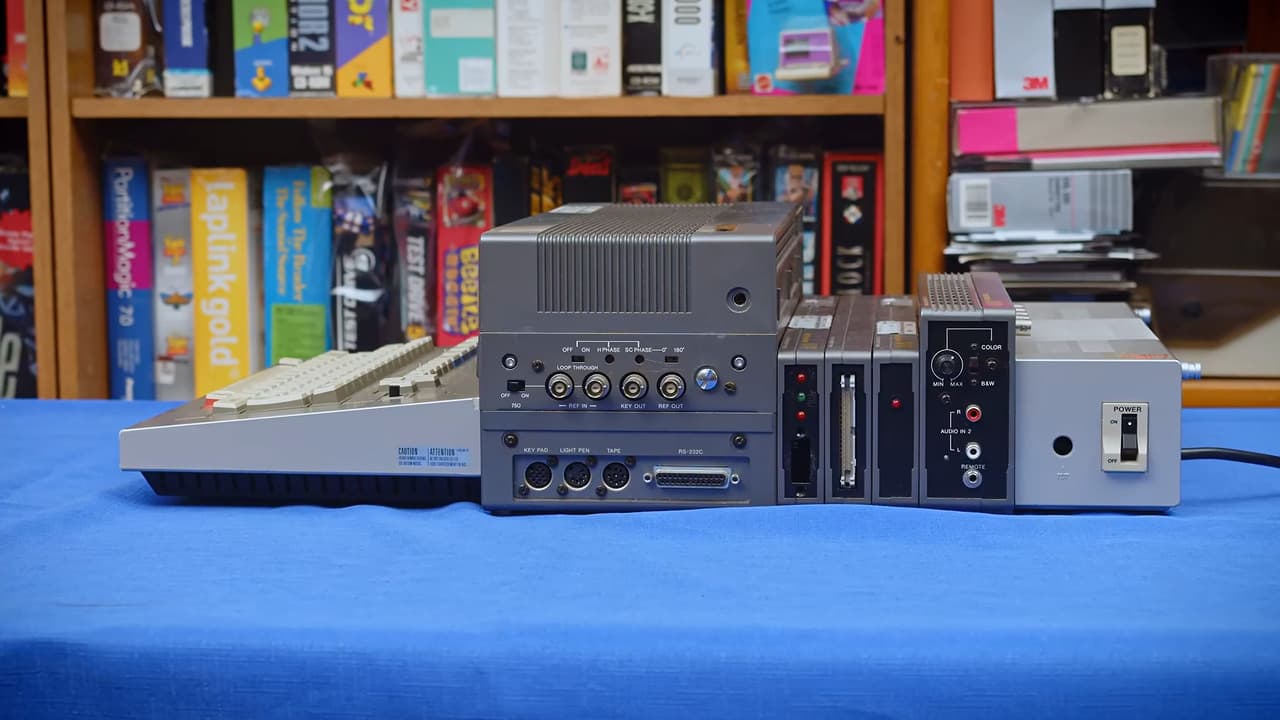
Sony entered the personal computer market in 1982 with the SMC-70, a CP/M machine running a 4 MHz Z-80 processor with 3.5-inch floppy drives, a 16-color graphics system, and onboard sound. Those specs, especially the graphics, were ahead of what most competitors shipped that year.
The hardware design is where the SMC-70 gets strange. Instead of internal expansion cards like the S-100 or ISA buses used by the Altair and IBM PC respectively, Sony used stackable external modules physically skewered together and linked by ribbon or external cables. No case cracking required. The video output module reflected Sony's AV background, and an 8086 module eventually appeared, though it supported CP/M-86, not MS-DOS, arriving too late to matter.
Tech Tangents' hands-on video goes deeper than the spec sheet, covering the power supply repair needed to get this unit running and the 3D-printed parts used to restore its original appearance. The expansion system and the 16-color graphics architecture are the real reasons to watch. Both represent engineering decisions that deserved more runway than the market gave them.
[READ ORIGINAL →]