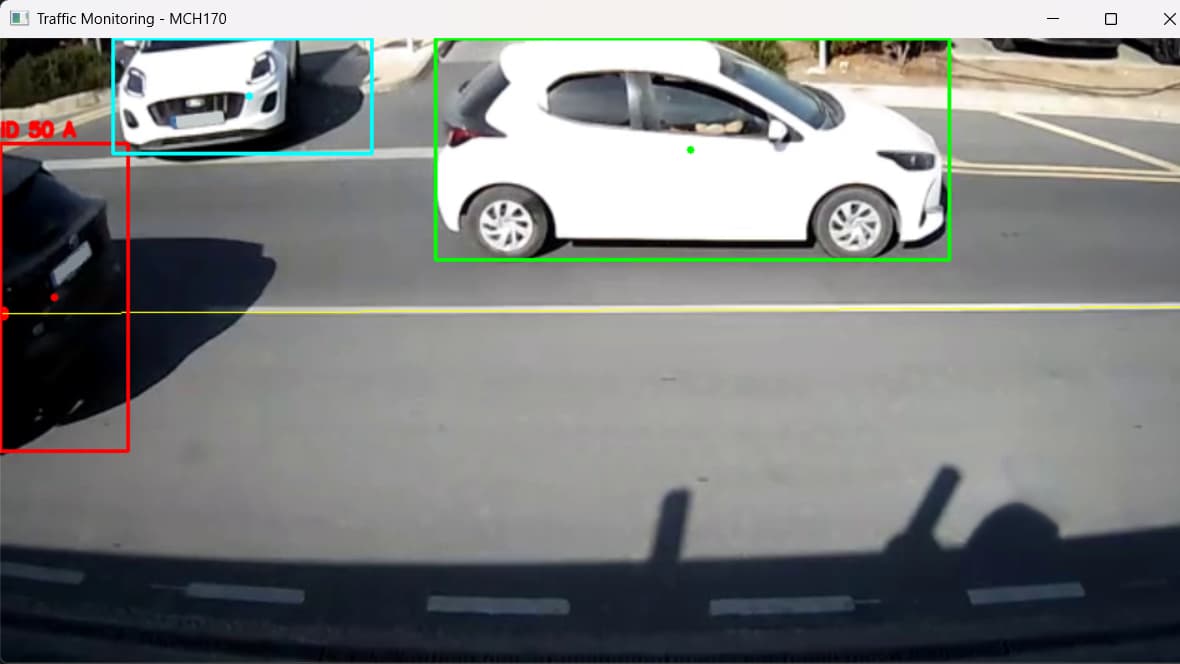
Marios Christoforou, a Computer Engineering student at the University of Cyprus, built a solar-powered traffic counter using a Raspberry Pi 5 with 4 GB RAM, a 720p webcam, a 12V lead-acid battery, and a 100W solar panel. Vehicle detection runs on YOLOv8 Nano, classifying cars, trucks, buses, and motorcycles via bounding boxes, with software logic preventing double-counting as vehicles cross the frame.
The build required serious power discipline to survive on solar alone. Christoforou disabled Bluetooth, PCIe, audio, and HDMI on the Pi, underclocked both CPU and GPU, ran the OS headless, and cropped irrelevant regions from the video feed before inference. The full project write-up at mch170.com details each optimization decision and the trade-offs between accuracy and watt consumption.
What makes this worth reading is not just the finished system but the iterative engineering log: how each hardware and software constraint forced a specific solution. At a moment when commercial license plate readers like Flock cameras dominate the traffic-monitoring conversation, this project is a reminder of what a student, a single-board computer, and a free object detection model can do off the grid.
[READ ORIGINAL →]