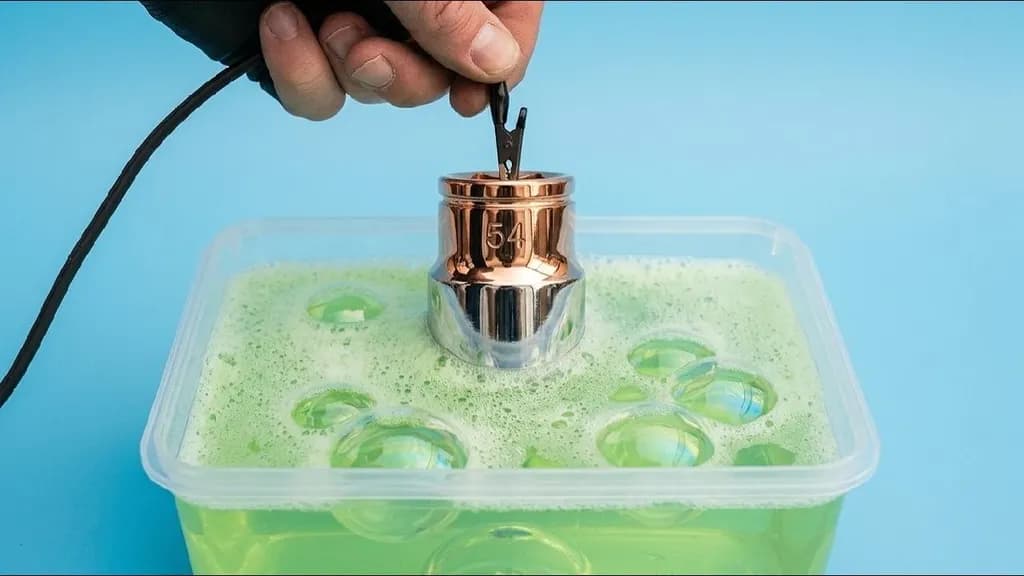
Kovancapol's Instructables guide shows how to achieve a mirror-finish nickel plate on hand tools using low current density electroplating. The process requires nickel sulfate, nickel chloride, nickel anodes, standard glassware, and a DC power supply. The results, visible in the accompanying video, are production-quality reflective surfaces produced on a bench.
The chemistry is the barrier most people never cross. This guide walks through the reagent ratios and bath setup that make the difference between a dull deposit and a true mirror finish. That specific process detail is why the full write-up is worth reading, not just watching the video.
The immediate application is tool refinishing, but the process extends further. Electroplating conductive-coated 3D prints with nickel is feasible and documented. Nickel over PCB traces is a dead end since nickel oxidizes and becomes difficult to solder, but layering nickel with other plating metals produces results worth exploring on their own terms.
[READ ORIGINAL →]