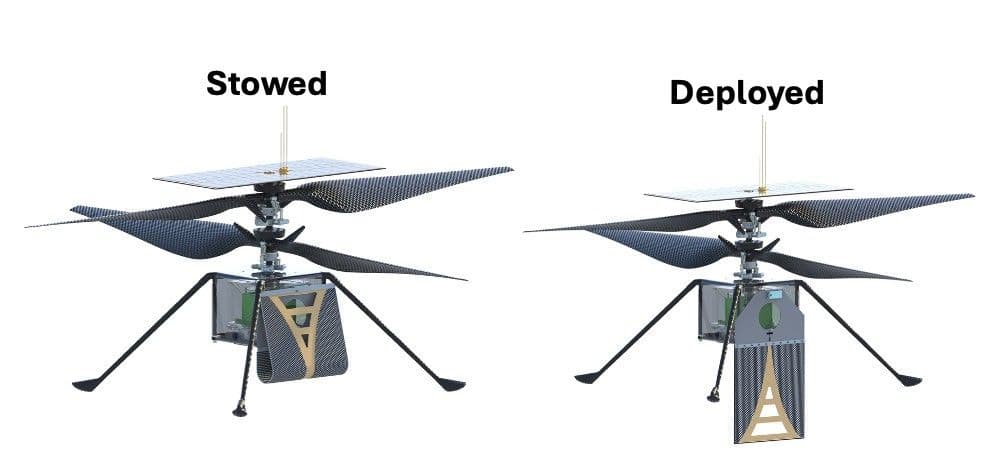
NASA's Jet Propulsion Laboratory is testing a folding ground-penetrating radar antenna for the SkyFall mission, a fleet of three autonomous Mars helicopters designed to search for subsurface water. The antenna uses a scaled-down Vivaldi flexible antenna design, chosen because it can fold like fabric against the helicopter body during landing, since the antenna extends beyond the landing legs when deployed. JPL engineers have run it through simulated Mars landings and thermal cycling tests covering the planet's cold nights and warm days.
SkyFall is tentatively scheduled to launch in 2028, deploying from a Space Reactor-1 fission-powered spacecraft built around repurposed Lunar Gateway hardware. That spacecraft's fate is uncertain following the Gateway program's cancellation, which puts the mission timeline in question. The engineering work continues regardless, and the antenna testing is the kind of detail that determines whether a concept stays on paper.
The original JPL report is worth reading for the specifics on how many landing cycles the Vivaldi antenna survived and what thermal range it was tested across. Those numbers will tell you whether this is a solved problem or a constraint that still shapes the mission design.
[READ ORIGINAL →]