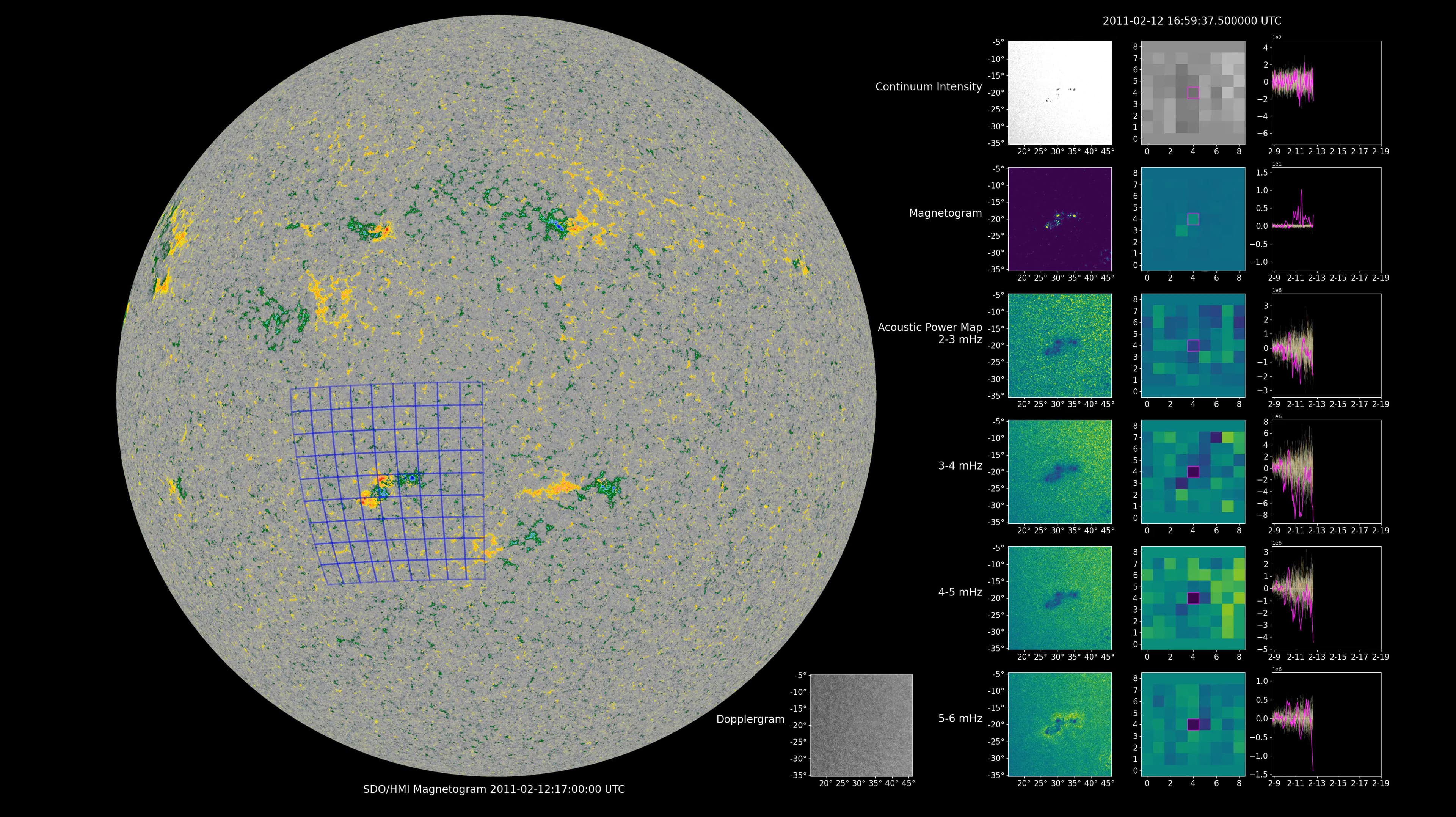
NASA's COFFIES model, short for Consequence Of Fields and Flows in the Interior and Exterior of the Sun, can predict active sunspot regions up to 12 hours before they become visually detectable. The system analyzes surface magnetic field measurements and acoustic wave data to infer magnetohydrodynamic activity deep inside the Sun, a layer we have no way to observe directly.
The detection method is entirely indirect. COFFIES listens for pressure waves and magnetic signatures propagating outward from subsurface plasma flows, effectively hearing sunspots before they surface. It is a black box by nature, but heliophysicists are treating its outputs as a diagnostic tool to pressure-test their own physical models of solar interior dynamics.
The operational stakes are concrete. A Carrington-class geomagnetic storm today would devastate power grids and satellite infrastructure globally, and no physical barrier like the theoretical orbital Stormwall concept is anywhere near deployment. Twelve hours of additional warning is a meaningful operational margin. The full article details how the model was built and trained, and COFFIES maintains a YouTube channel documenting ongoing work worth following directly.
[READ ORIGINAL →]