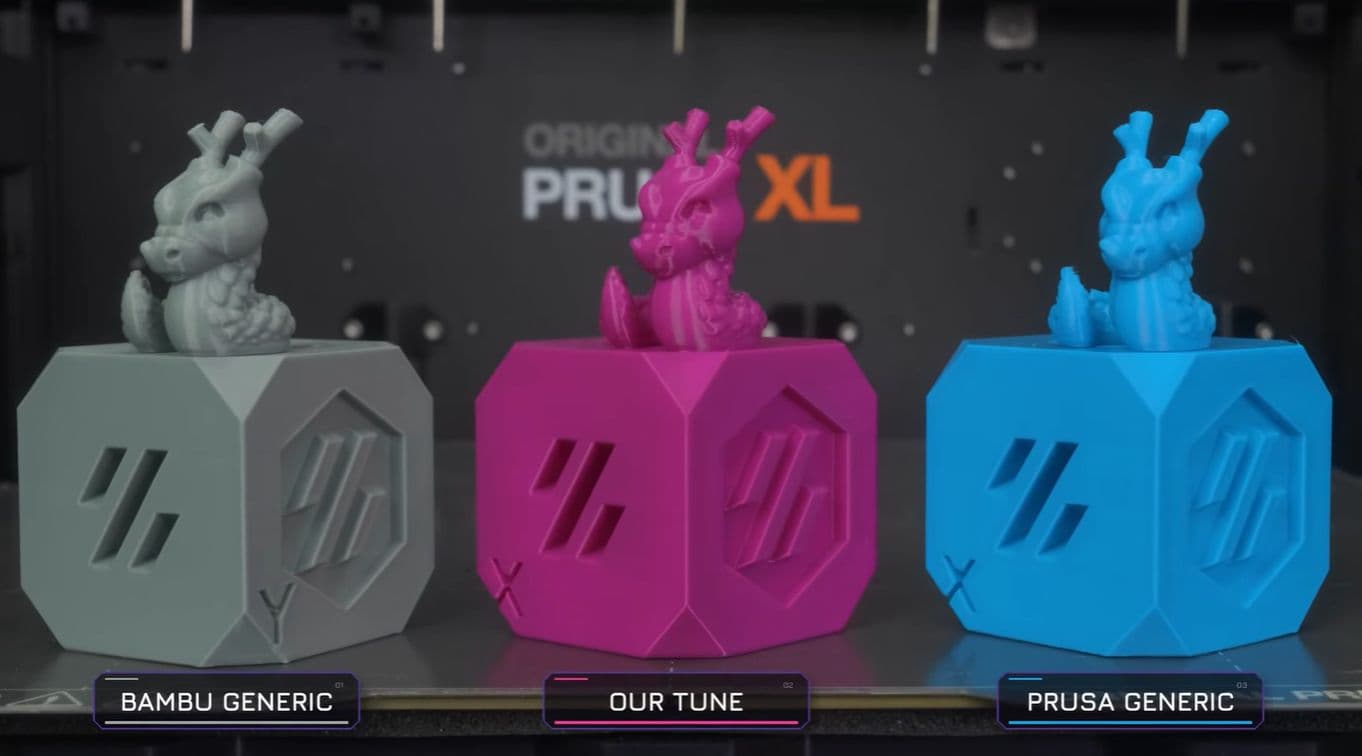
Manual filament tuning still beats generic presets, even on modern consumer FDM printers with automatic bed leveling, pressure advance, and temperature regulation. YouTuber MandicReally ran a direct comparison between a hand-tuned ASA profile and a generic preset, and the tuned profile printed faster and more accurately, because it accounted for the specific printer's nozzle, hotend, and feed system rather than assuming average hardware.
The tuning process covered in the video is not superficial. MandicReally walks through material drying, temperature towers, flow ratio, flow rate, pressure advance, retraction speed, and material shrinkage compensation. Each variable compounds. Skip one and the others can't fully compensate. That methodical sequence is the part worth watching, not just the final print comparison.
The gain is not dramatic for casual one-off prints. It matters most in production contexts, where faster non-conservative speeds and tighter dimensional accuracy reduce waste and time across many runs. If you run any volume of FDM output, this video makes a concrete case for building material-specific profiles rather than relying on manufacturer defaults.
[READ ORIGINAL →]