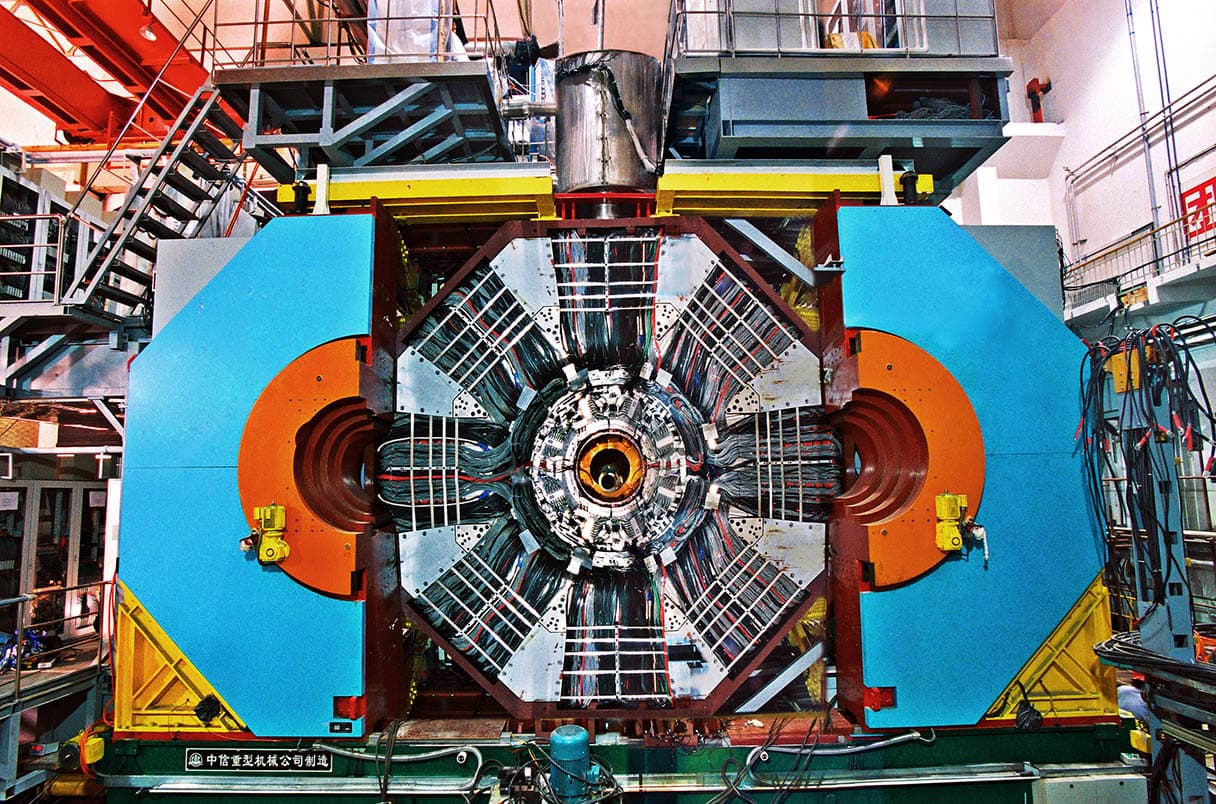
The Beijing Spectrometer III (BES III) at the Beijing Electron-Positron Collider II has produced the strongest evidence yet for the glueball, a particle predicted by the Standard Model but never conclusively observed. The candidate particle, X(2370), emerged from collision data that the collaboration spent years sorting through. The paper landed on ArXiv in late July 2026.
A glueball is a hadron composed entirely of gluons, the force-carrying particles of the strong nuclear force, with zero quarks. It decays almost immediately into pions. The Standard Model permits this because gluons carry colour charge, allowing them to bind to each other without quark involvement. Physicists accept a mostly-gluon state as sufficient confirmation, since pure gluon isolation in collider conditions is effectively impossible.
This discovery changes nothing practical. The particle is too short-lived to exist outside extreme artificial environments. What makes the full paper worth reading is the methodological detail: how the collaboration separated a genuine gluonic signal from terabytes of collision noise, and the non-zero possibility that X(2370) is not a glueball at all, but something the Standard Model does not currently account for.
[READ ORIGINAL →]