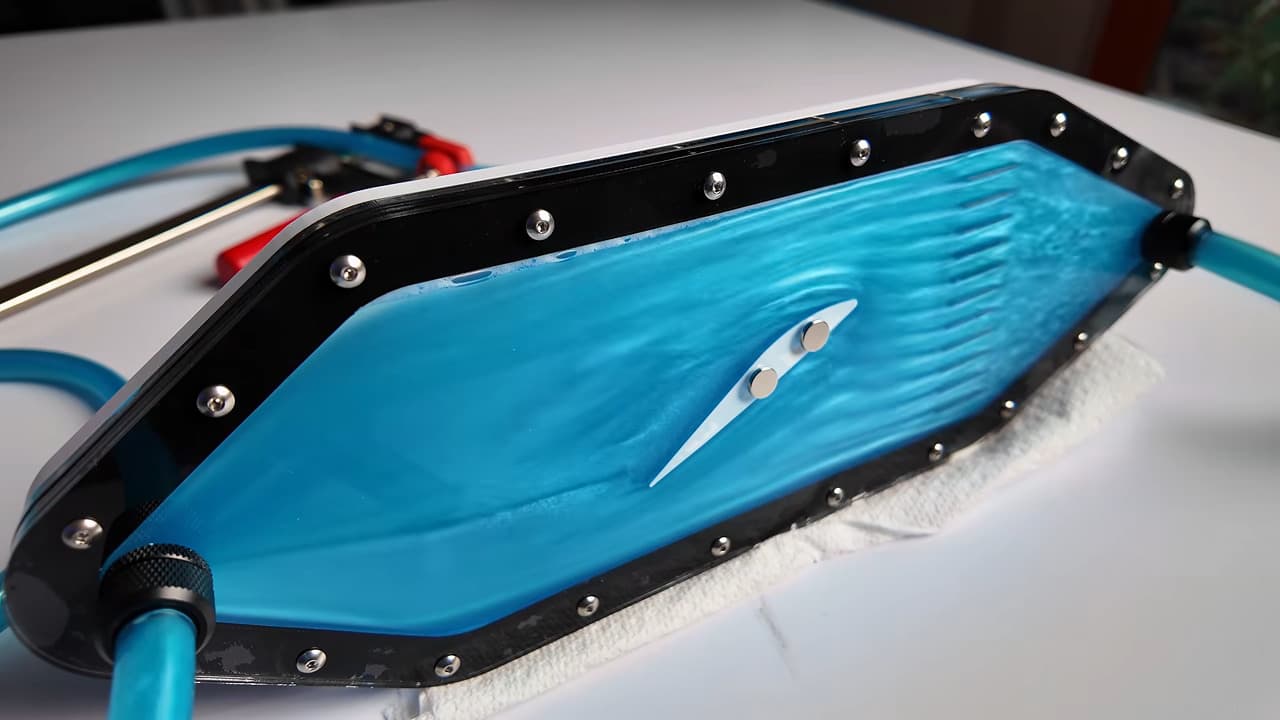
Rheoscopic fluid, built from cosmetic mica flakes, water, and a drop of soap, can replace slow computational fluid dynamics simulations for qualitative flow visualization. YouTuber Visual Thinker demonstrates two working builds: a thin-layer acrylic viewport where a magnet-driven Benchy hull cross-section moves through the fluid, and a laser-cut acrylic wind tunnel with 3D-printed parts calibrated to match Reynolds number constraints.
The physics is straightforward. Mica flakes are flat, reflective plates that align with fluid shear stress, making flow structures directly visible under light. The soap surfactant keeps the flakes in suspension and prevents clumping, a fix Visual Thinker found necessary for his specific mica source. The wind tunnel build is where this moves past novelty: match your scale and flow speed correctly and you get real qualitative data, not just aesthetics.
The full video is worth watching for the wind tunnel build alone, which shows exactly how acrylic sheet construction and printed fittings translate into a functional analog flow instrument. Visual Thinker also floats the idea of embedding the Benchy mechanism into a coffee table with an underslung CNC drive, the same class of hardware used in sand drawing tables. The construction details and Reynolds number discussion in the video are what make this more than a pretty demo.
[READ ORIGINAL →]