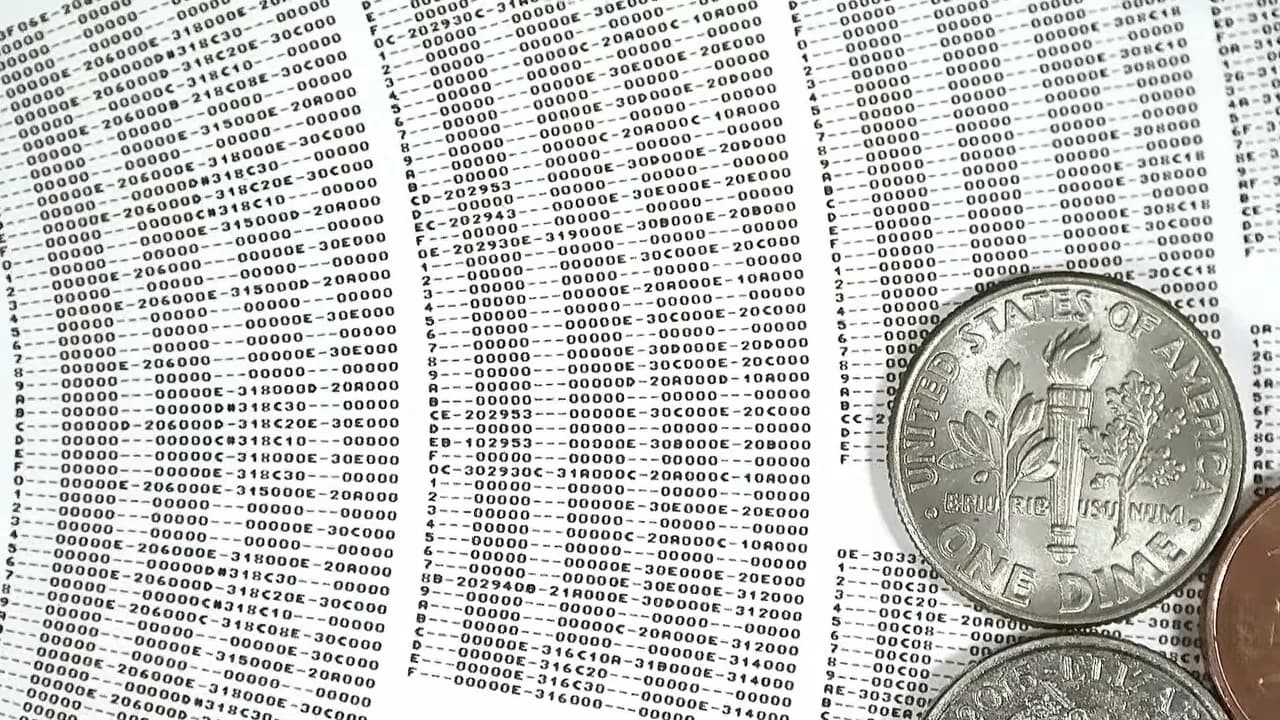
RobDevBuilds has built a physical MOD file player that reads music encoded directly onto paper disks, no CD involved. The front face of each disk prints MOD pattern data row by row in hexadecimal columns, one per voice or instrument, rendered in a modified Amiga Topaz font and read back via OCR. The back encodes the first 1084 bytes of the MOD file in a custom QR-inspired barcode format Rob designed himself, storing the 8-bit audio samples without lossy compression, something only possible because MOD files are compact enough to make it viable.
The hardware requires two cameras, one per side, both mounted on stepper-driven linear sleds that track across the spinning disk like an optical turntable. The front camera handles OCR of the note pattern grid. The rear camera reads the barcode strips encoding samples, metadata, title, artist, and pattern sequencing. The current build has a known limitation: pattern-jump speed is too slow for some MOD files, and Rob is documenting fixes in a follow-up video.
The reason to read the full project and watch the video is the engineering detail behind the custom barcode format and the OCR pipeline Rob built for a font that was never meant to be machine-read. MOD files survived because they are self-contained and small, carrying their own samples unlike MIDI. Rob is exploiting exactly that property to argue paper outlasts M-Disk's claimed 1000-year archival rating. Whether that argument holds is worth examining closely.
[READ ORIGINAL →]