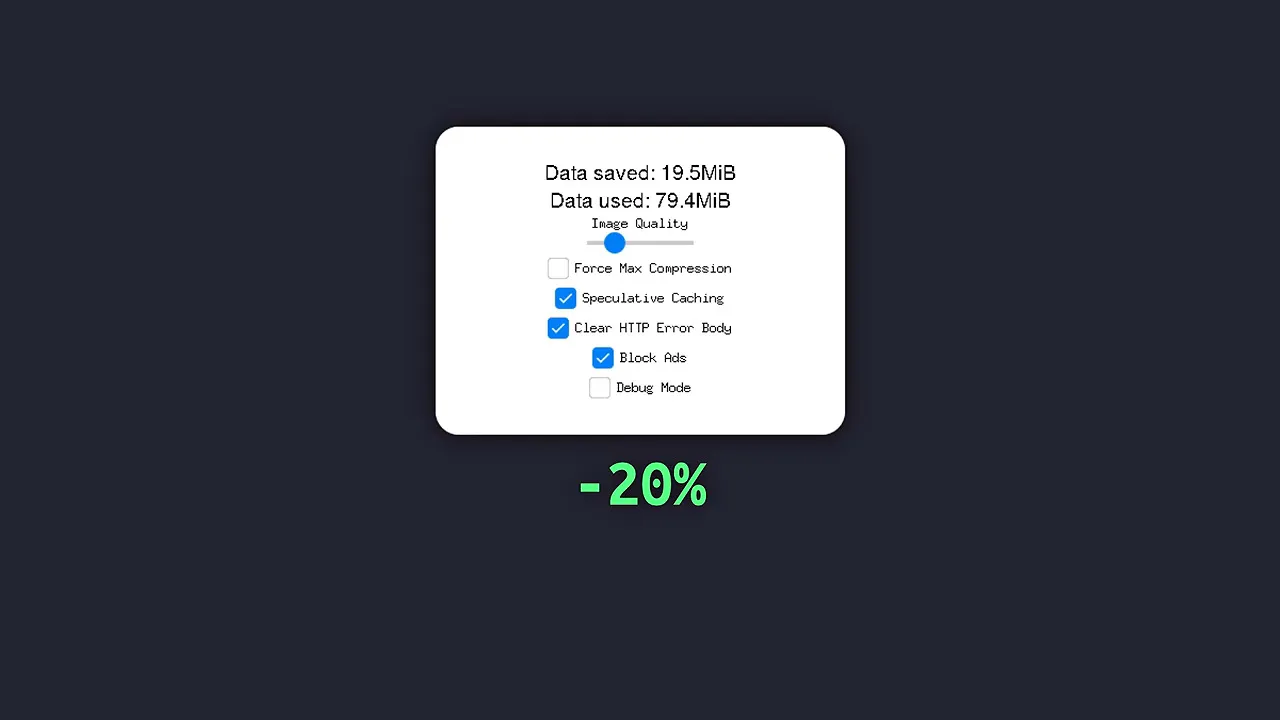
A developer called PortalRunner built Arachnidium, a self-hosted HTTPS compression proxy that shrinks web traffic by converting images to WebP, reducing their resolution, and forcing maximum gzip compression on every page request. It runs on mitmproxy, not custom infrastructure, and the compression aggressiveness is tunable per user via a config file.
The real argument for reading the full writeup is in the implementation details: how resolution reduction stacks on top of format conversion for mobile screens, why the proxy only applies maximum compression by default to JavaScript-heavy pages, and how routing traffic through your home server doubles as a private VPN without a separate service. These are not obvious design choices, and the reasoning behind each one is worth your time.
Arachnidium is strictly a bandwidth tool. It does not help legacy hardware access the modern web the way FrogFind or MacProxy do. The code is on GitHub and a video walkthrough is public. If you are paying for metered mobile data, this is a working solution, not a concept.
[READ ORIGINAL →]