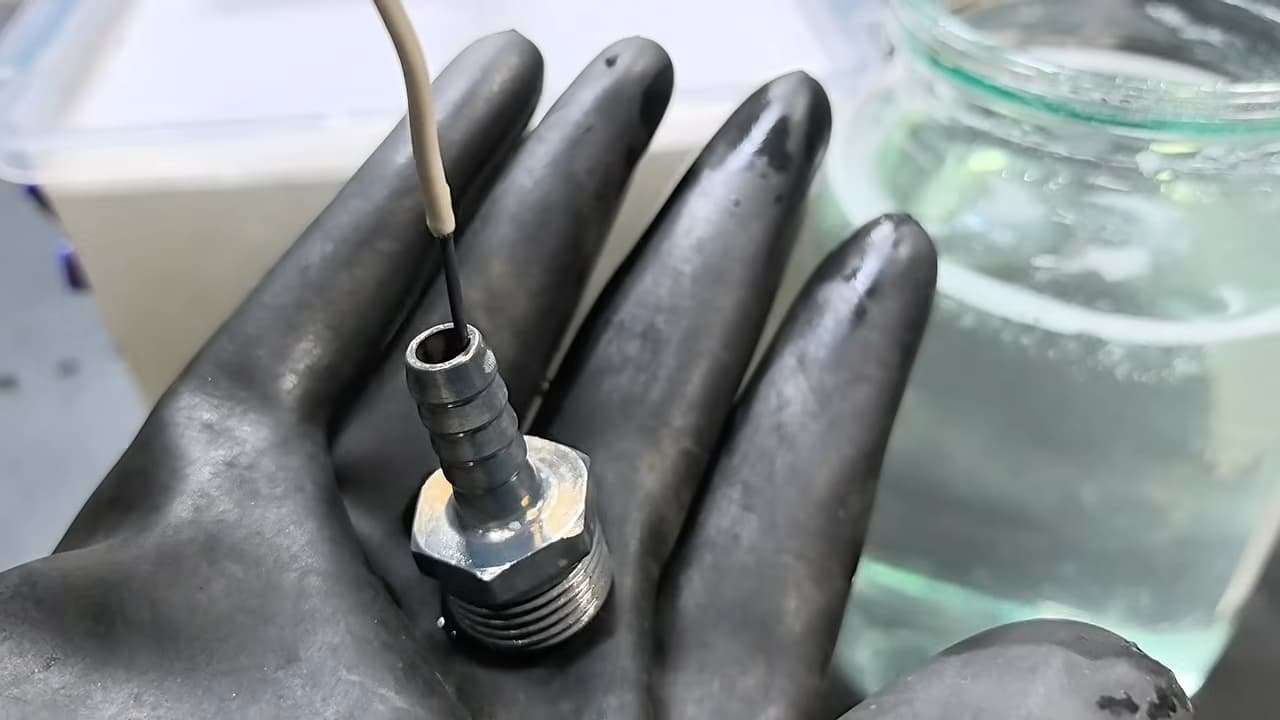
Acid-free zinc electroplating is real, and it works better on complex geometries than the acid alternative. The process replaces strong acids with sodium hydroxide dissolved in distilled water, with metallic zinc, sugar, and liquid soap added to the bath. A graphite anode and a DC current do the rest, depositing a uniform zinc layer on the steel or iron cathode.
The alkaline chemistry is the key technical detail worth understanding here. Basic solutions plate more evenly into deep crevices and irregular surfaces, a property that acid baths struggle to match. The finish can be brightened post-plate with a mild citric acid dip, the only acid in the entire workflow.
Read the full Instructables write-up for the exact sodium hydroxide concentrations, current parameters, and timing. The process sits in a practical middle ground: more durable than paint, no industrial infrastructure required, and now no acid cabinet either.
[READ ORIGINAL →]