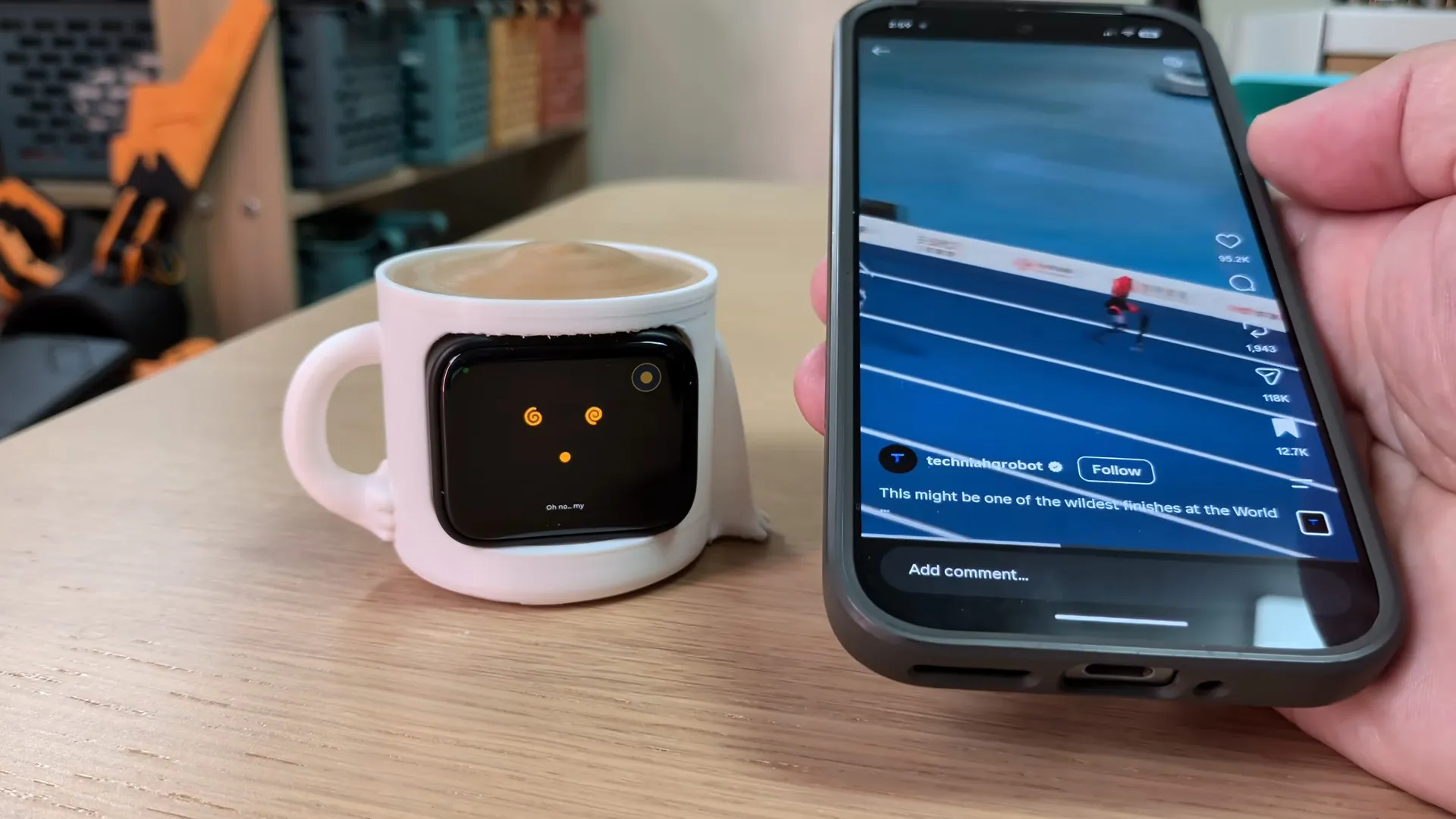
Builder [brenpoly] made a virtual pet that gets sick and dies when you use your phone too much. The device runs on an ESP32 inside a 3D-printed case and communicates with a companion app that monitors screen time and notifications. The core mechanic is blunt: doomscroll, and your little buddy suffers. That feedback loop is hardcoded and requires no AI to be effective.
The LLM layer is where the project gets interesting. A local agent on the phone, not a cloud service, reads notifications and screen time data, then relays summaries through a Bluetooth-connected microphone in the pet enclosure using a Whisper speech model. Text-to-speech output runs via Piper, also local. The pet speaks. That audio feedback, a voice telling you to put the phone down, tests as more effective than a silent sad face.
The full project is on GitHub under the name Polymo. What makes the original worth reading is the tension between two design choices: the hardcoded empathy hook that works on its own, and the local LLM stack that adds genuine utility without requiring a data subscription or cloud dependency. The question [brenpoly] doesn't fully answer is which layer is doing the real behavioral work.
[READ ORIGINAL →]