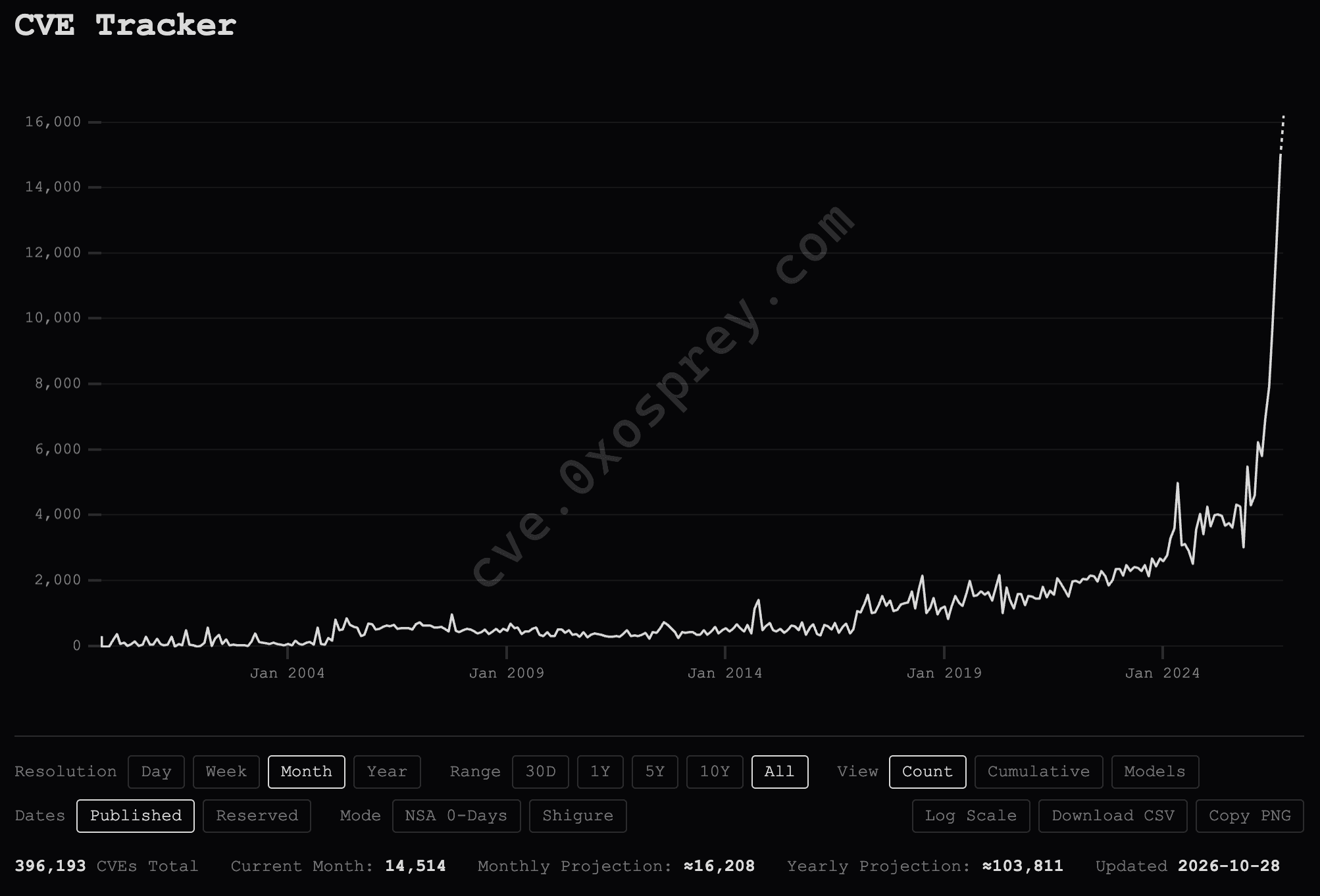
AI-accelerated cyber vulnerabilities are no longer theoretical. October 2026 produced a wave of critical disclosures, including PHP2Shell and GitLab exploits, a suspected multi-billion dollar hack at Binance, and what the Wall Street Journal described as strained cyber first responders. CVE tracking data shows an exponential rise in disclosed vulnerabilities with no plateau in sight. The author coined the term 'Black October' to mark the moment AI-enabled cyber risk moved from forecast to fact.
The central argument under scrutiny: was Anthropic's Claude Mythos ever actually the category-defining weapon it was marketed as? The author's prior take says no. GLM-5.3, not Mythos, appears to be the model that crosses the meaningful capability threshold for cyberattack enablement. More provocatively, the author argues that an accidental open-weight leak of Mythos would have produced acceleration, not a step change in societal risk. That is a precise and falsifiable claim worth reading in full.
This piece matters because it attempts to hold a prior prediction accountable against live events, which almost no one in AI commentary does. The feedback has been loud, some substantive, some not. The author's framework for distinguishing acceleration from phase transition in AI-enabled harm is the analytical core here, and it has direct implications for how regulators and labs should think about model release policy going forward.
[READ ORIGINAL →]