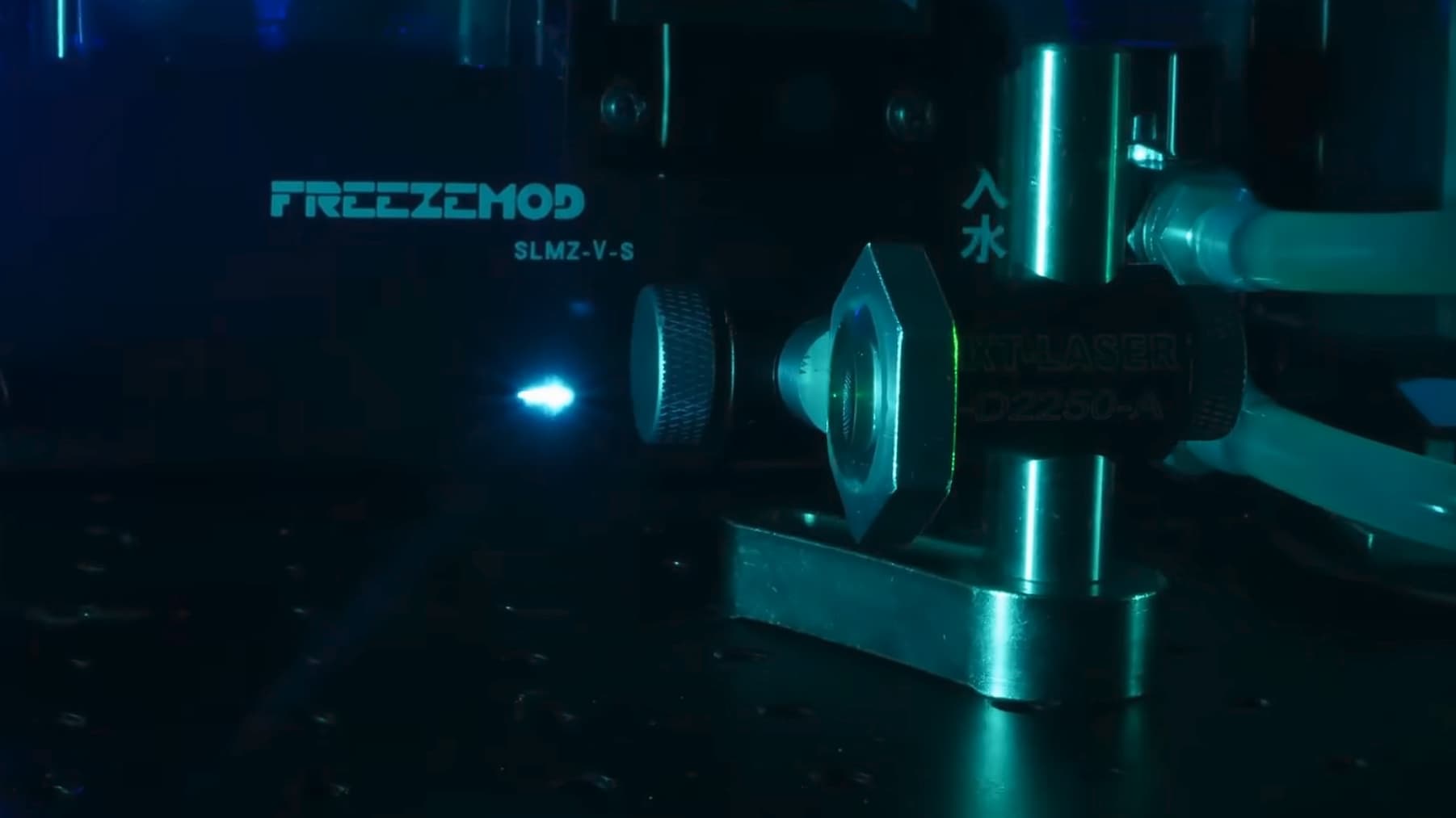
A chromium-doped yttrium aluminum garnet Q-switch turned a benchtop laser's 150-microsecond, 970-watt pulse into a 14-nanosecond, 1.3-megawatt spike. Total energy dropped from 137 mJ to 77 mJ. The physics is simple: the Q-switch blocks cavity resonance, lets the gain medium saturate, then opens all at once, dumping stored energy in a fraction of the time.
Builder Les tested multiple Q-switch crystals across different absorption levels using a pyroelectric energy sensor and a fast photodiode. At 92% absorption, peak power reached 2.25 MW. Higher peak power did not improve cutting performance on metal targets. The pulse was too short to transfer heat effectively, producing surface ablation only. It was, however, enough to ionize air and shatter glass at the focal point.
The full writeup is worth reading for how Les built his own absorption meter to characterize each crystal, and for the direct measurement comparisons across absorption levels. This is the second documented upgrade to this laser, which started life as a tattoo-removal unit. The earlier modification replaced the gain medium itself.
[READ ORIGINAL →]