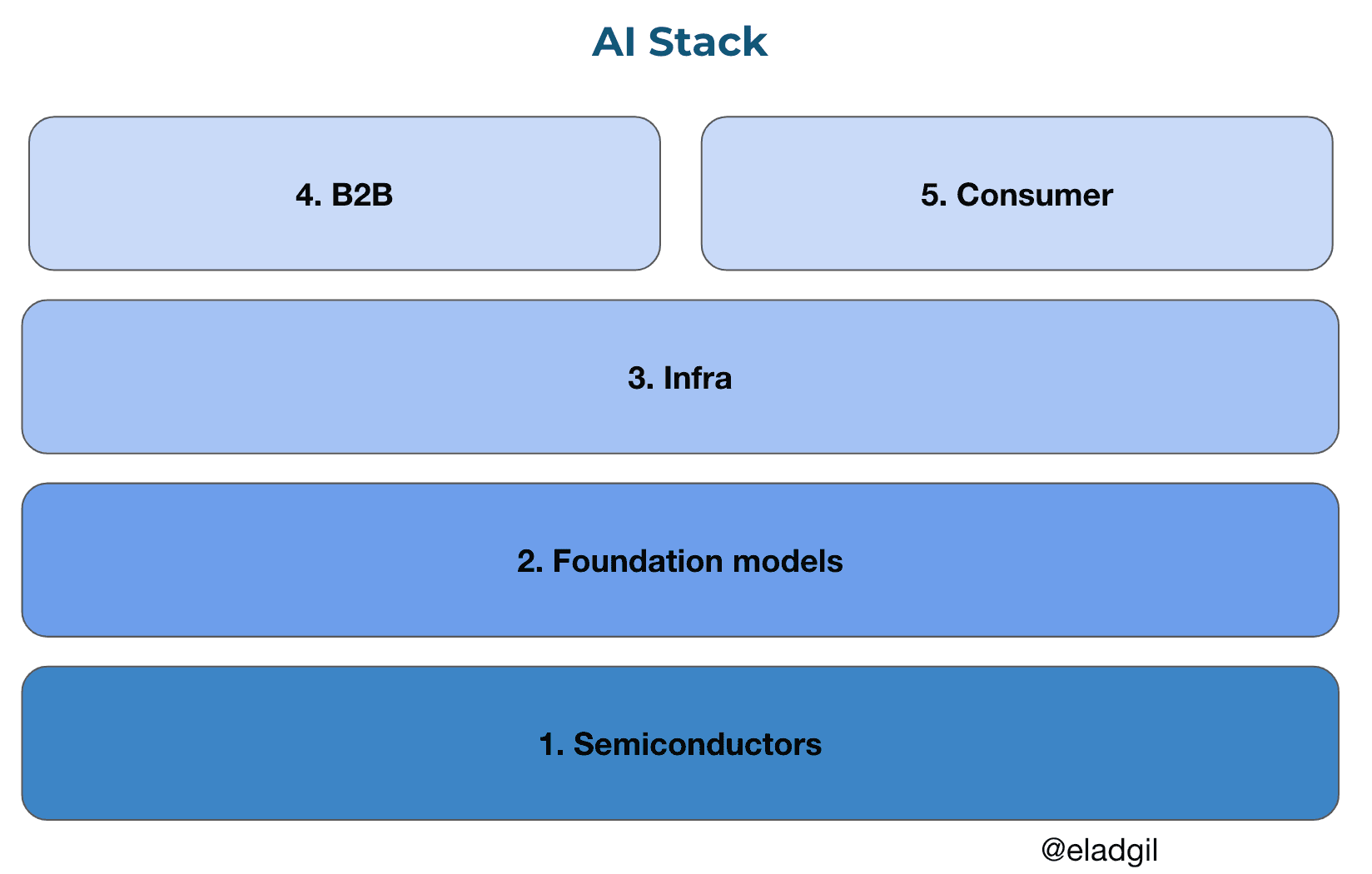
Generative AI is getting harder to understand, not easier. Elad Gil, an early-stage investor who called the frontier model oligopoly in 2021, has published a structured list of open questions across every layer of the AI stack. His core observation: the market is evolving exactly as he predicted, but the implications of that evolution remain deeply unclear.
The oligopoly is forming. Frontier LLMs now require capital at a scale only cloud providers and nation-states can supply. Microsoft put $10 billion into OpenAI. Amazon and Google combined for $7 billion into Anthropic. Meta announced a $20 billion compute budget for Llama. Azure grew 6 percentage points in Q2 2024 from AI alone, an annualized revenue increase of $5 to $6 billion, roughly half of Microsoft's total OpenAI investment returning per year. Venture capital is a rounding error by comparison. Meanwhile, commodity models are dropping fast: training a GPT-3.5 equivalent today costs roughly one-fifth what it did two years ago.
The questions Gil raises are worth reading in full because they are not rhetorical. He is genuinely asking what value accrues to model providers versus application layers, whether open-source frontier models can remain competitive as training costs compound, and who actually wins when infrastructure becomes a loss leader for cloud revenue. These are the unanswered structural questions that will determine where billions in value land.
[READ ORIGINAL →]