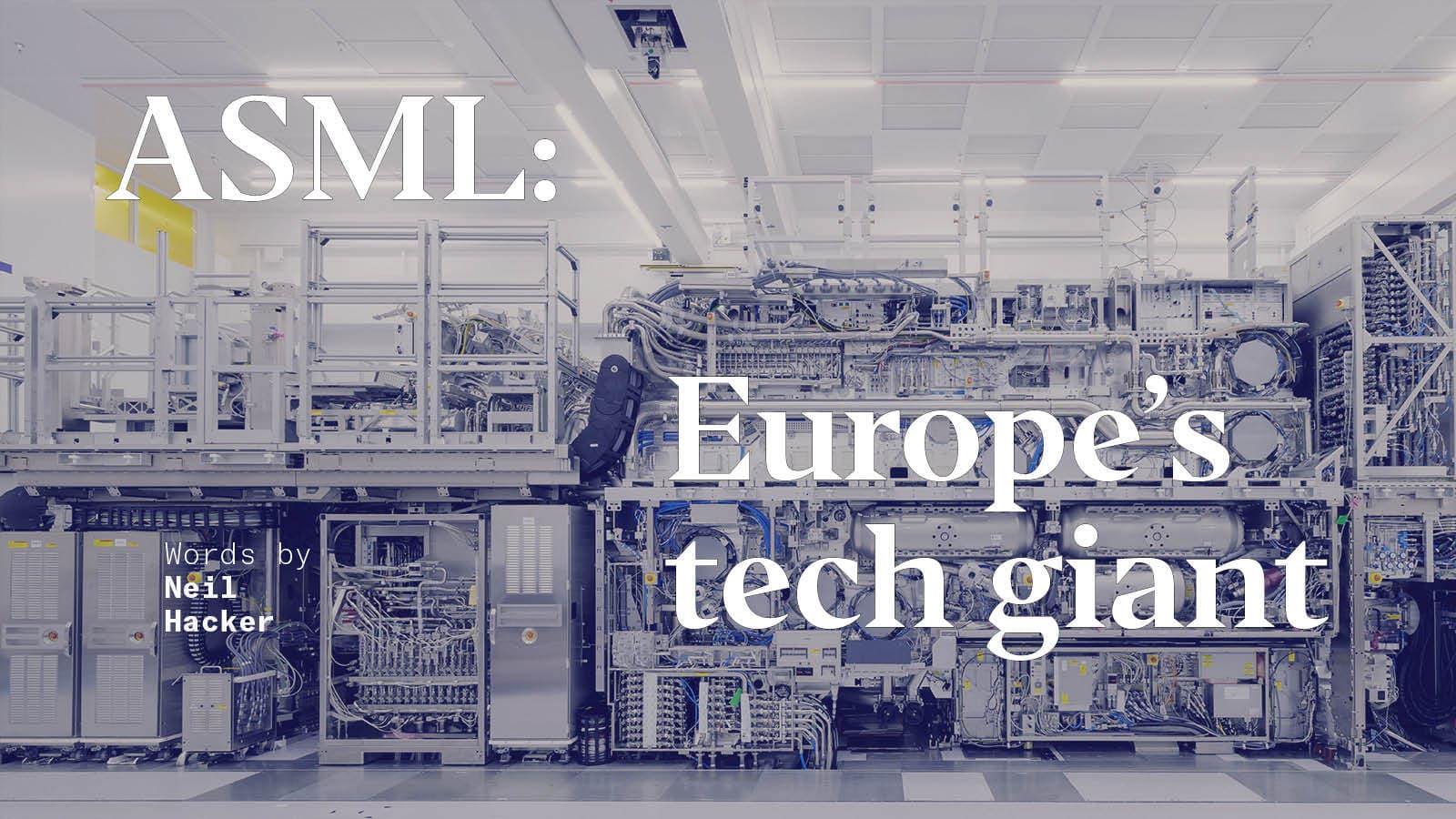
ASML holds a global monopoly on extreme ultraviolet lithography machines, the only tools capable of printing the transistor patterns inside leading-edge chips from TSMC, Intel, and Samsung. No EUV machine, no 3nm or 2nm node. The company spent roughly 20 years and billions of euros developing EUV before it shipped a production-ready system in 2017.
The story worth reading is not the monopoly itself but how ASML got there: a decades-long bet made when EUV was considered a long shot, sustained through near-bankruptcy, a 2018 industrial espionage case involving a Chinese competitor, and the quiet absorption of critical suppliers to lock in the supply chain. Each EUV machine contains over 100,000 parts, requires a laser fired 50,000 times per second at tin droplets, and costs approximately 380 million dollars.
ASML now sits at the center of the US-China chip war, with Washington pressuring the Netherlands to restrict exports of both EUV and older deep ultraviolet systems. The original piece traces how a single Dutch company became the lever that governments are now fighting to control.
[READ ORIGINAL →]