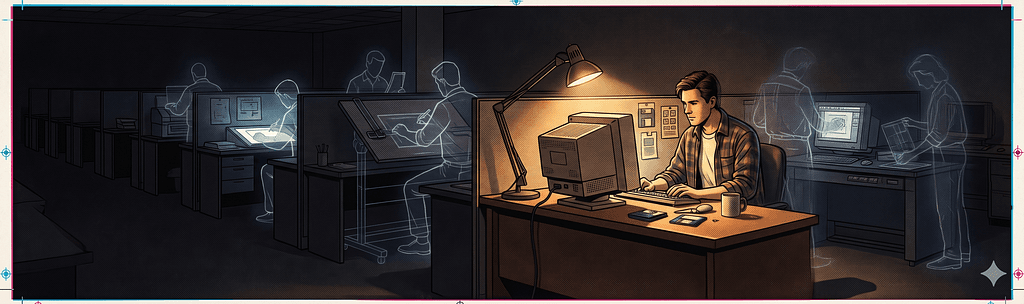
The T-shaped UX model is collapsing. The UXPA salary survey analyzed by MeasuringU recorded the worst net cut in UX staffing on record: 37% of organizations reporting layoffs, 9% of respondents laid off. The cause is structural, not cyclical. AI has automated the handoffs that justified specialization, and one person can now run the full relay that used to require a row of specialists.
The T-shape was always misread. When Tim Brown at IDEO coined the hiring standard, the horizontal bar meant empathy and curiosity, not a skills checklist. Somewhere between McKinsey's internal use in the 1980s and David Guest's 1991 print definition, the model hardened into job ladders: researcher, content designer, information architect, interaction designer, design systems specialist. Each owned a sliver. Engineering and product management split too, but into fewer, broader roles, which is why they absorbed the shock better. UX fractured further and is now paying for it.
The piece is worth reading in full because the argument is not just about job titles. It traces how specialization was a historical detour, not the default state of craft, and what the unwinding actually requires of someone whose skills are deliberately narrow. The answer it builds toward is not 'learn more tools.' It is a harder conversation about judgment, ownership, and what a Directly Responsible Individual model means when headcount is no longer the proxy for UX leadership.
[READ ORIGINAL →]