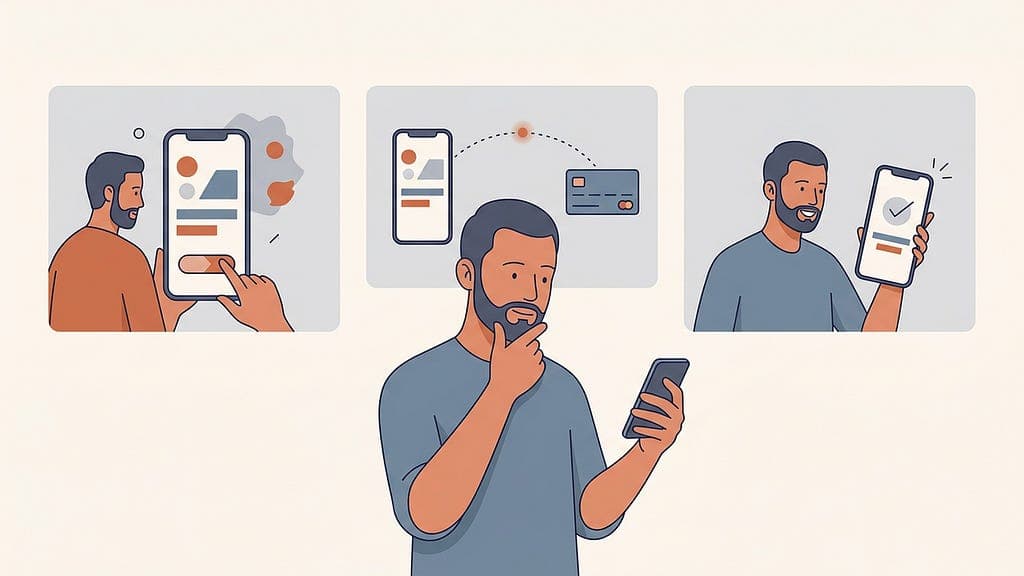
Trust in payments is not a branding problem. It is an interaction problem, decided in loading states, confirmation screens, and the half-second after you tap 'send.' Jose Coronado makes this case from 13 years of financial product design, six at PayPal and five leading design at Highnote, a card issuing and embedded finance platform. His core claim: Jakob Nielsen's 1994 heuristics on system status visibility and error prevention are not checklist items in fintech. They are the entire emotional architecture of the product.
The most concrete section covers instant payouts at Highnote, near-real-time transfers from issued cards to external debit accounts used for gig worker payouts and refunds. The team made three deliberate choices worth understanding in detail: setting speed expectations before the action with explicit copy and iconography, adding a slide-to-confirm gesture at the irreversible moment of transfer, and showing a processing animation even when the underlying operation needed none. The third choice is grounded in the Harvard-documented 'labor illusion' effect, researched by Ryan Buell, which shows users trust services more when they can observe work happening, even at a cost to speed. Coronado also separates this intentional friction sharply from deceptive patterns, the hostile kind Harry Brignull has catalogued for 15 years. Same mechanism, opposite ethics.
What makes the piece worth reading fully is what Coronado does not resolve. He does not have clean conversion data showing the friction was net positive. He flags that ownership of these micro-moments typically falls to nobody on most product teams, sitting between design and engineering with no clear accountability. The argument is not that he solved trust in payments. It is that most teams have not started trying.
[READ ORIGINAL →]