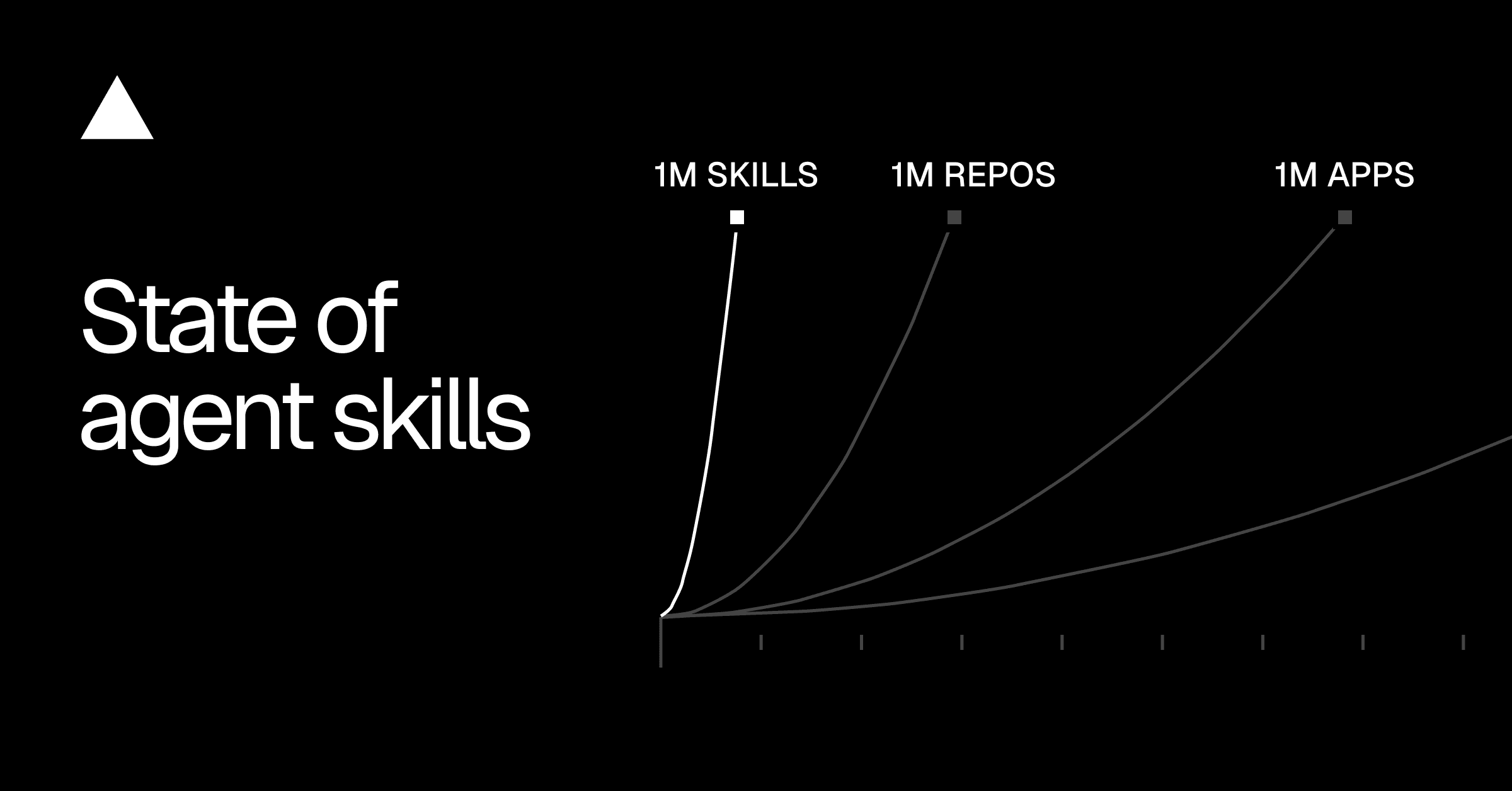
skills.sh hit one million agent skills in seven months, logging nearly 280 million installs. For context: GitHub took 27 months to reach one million repositories, npm took over nine years. The speed is structural. Writing a skill requires describing how a job should be done, not programming a computer to do it, which opens creation to anyone who understands a workflow. Anthropic introduced Agent Skills in October 2025; Vercel launched the skills.sh registry three months later.
The distribution of supply versus demand reveals where real value sits. Over half of listings are technical, with software engineering alone at roughly 25%. But installs spread wider: software engineering draws only 18% of installs, while business operations and writing each claim nearly 11%. The more telling metric is installs per listing. Business operations skills average 74% more installs than the registry mean. Research skills average 55% fewer. Agent workflow skills, ranked second overall at 14.8% of installs, top the charts among skills with at least 100,000 installs, because a planning or routing skill applies to every job an agent touches, not just one domain. Install concentration is severe: 375 skills, 0.04% of the registry, account for 62% of all installs.
The report's forward argument is the part worth reading in full. Cross-industry skills, those covering tasks that recur at banks, hospitals, and restaurants alike, represent 66% of classified skills but 87.5% of installs, averaging 3.6 times more installs per listing than industry-specific ones. The authors argue this general layer will become table stakes, pushing differentiated value toward company-specific knowledge: internal policies, exception rules, approval thresholds. They also flag a coming shift in how skills are evaluated, from install counts toward measurable task performance, with tests and benchmarks that assess whether an agent does a job better with a skill than without it.
[READ ORIGINAL →]