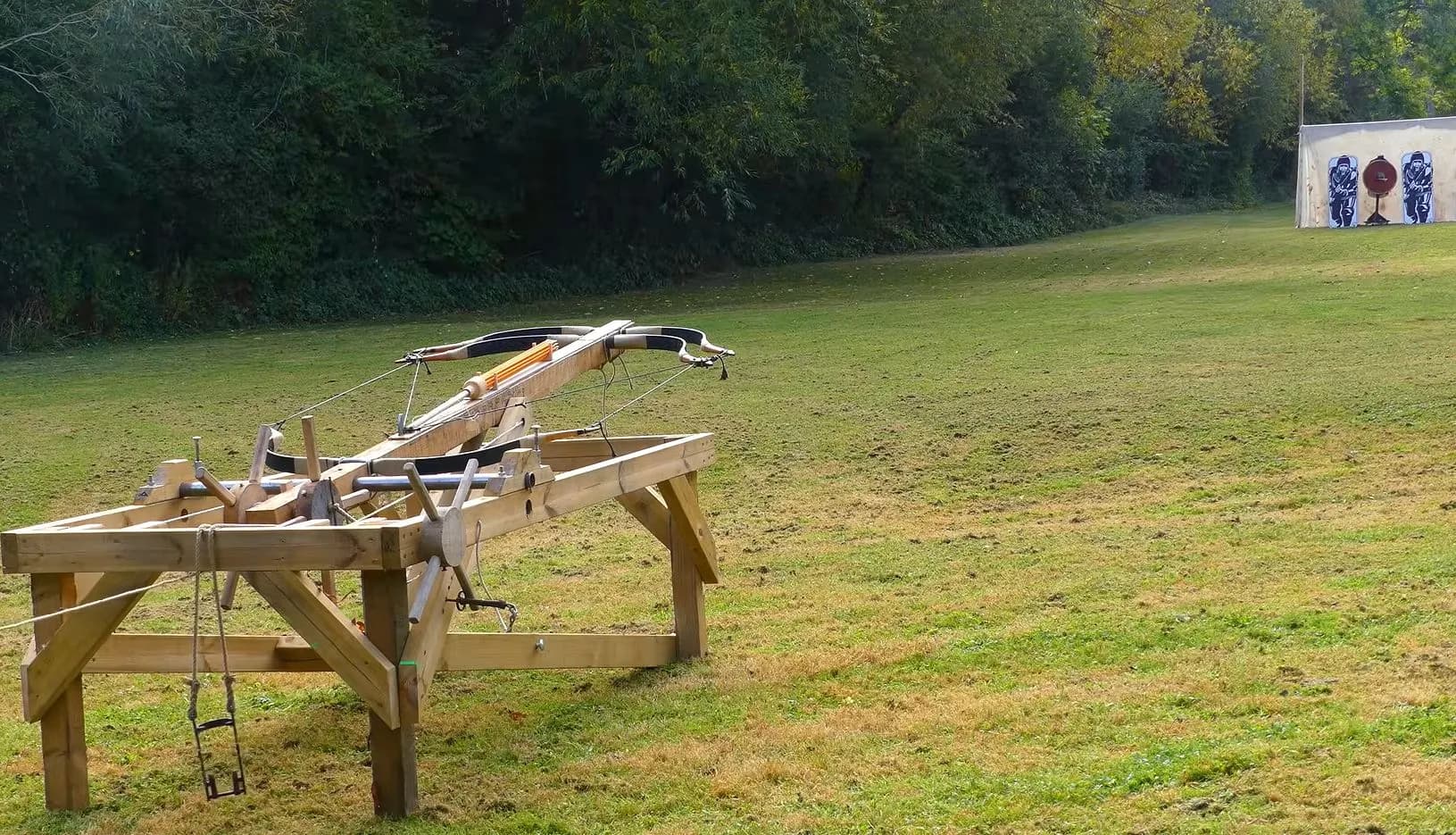
Ancient Chinese siege crossbows fired a multi-bolt ammunition type called the 'storm of crows', a bundle of smaller arrows designed to scatter across infantry formations. These weapons saw active use from hundreds of years BCE through the 16th century CE, when gunpowder replaced them with systems like the Korean Hwacha, a direct ancestor of modern multiple-launch rocket systems like the MLRS.
YouTuber Tod set out to reconstruct the storm of crows on a working siege crossbow and failed to make it reliable. The core problem is physics: the immense forces applied to a loosely bundled bolt cluster cause the arrows to scatter unpredictably or catastrophically. Historical records confirm these weapons existed, but Chinese engineers left no usable documentation on how they solved the dispersion problem.
Tod has announced a follow-up with design improvements and is soliciting community input. The real value of the full video is watching him systematically eliminate approaches, which maps the actual engineering problem space better than any summary can. If you care about medieval ballistics or projectile physics, the failure modes here are worth studying.
[READ ORIGINAL →]