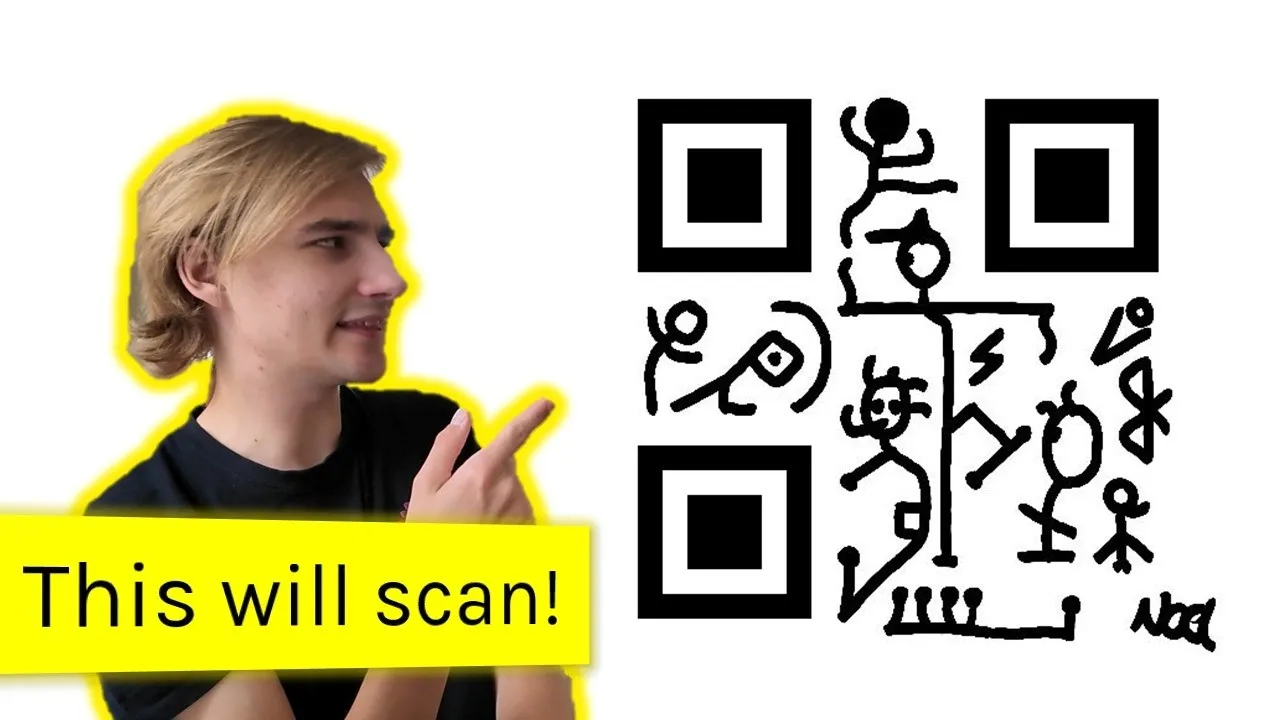
Noel Friedrich built a worksheet that lets you decode QR codes versions 1 through 5 by hand, no smartphone required. The tool walks you through transcribing a code to paper, then stepping through the bit-level structure manually. Slashes in the template mark error-corrected bits, telling you exactly where to flip a value back to recover the original data.
The more important part of Friedrich's write-up is what decoding by hand reveals about QR code generation. Once you understand the structure, you can exploit it. The same principles that make error correction work also allow you to embed artistic or human-readable elements into a valid, scannable code. Friedrich's HQR tool demonstrates this at noel-friedrich.de/hqr, producing codes with pictographic characters in place of standard modules.
Read the original for the error correction walkthrough, not just the headline trick. Understanding why bit-flipping works, and which regions of a QR code have slack you can manipulate, is the actual payload here. Friedrich's interactive decoder is live at noel-friedrich.github.io/read-qr-by-hand.
[READ ORIGINAL →]