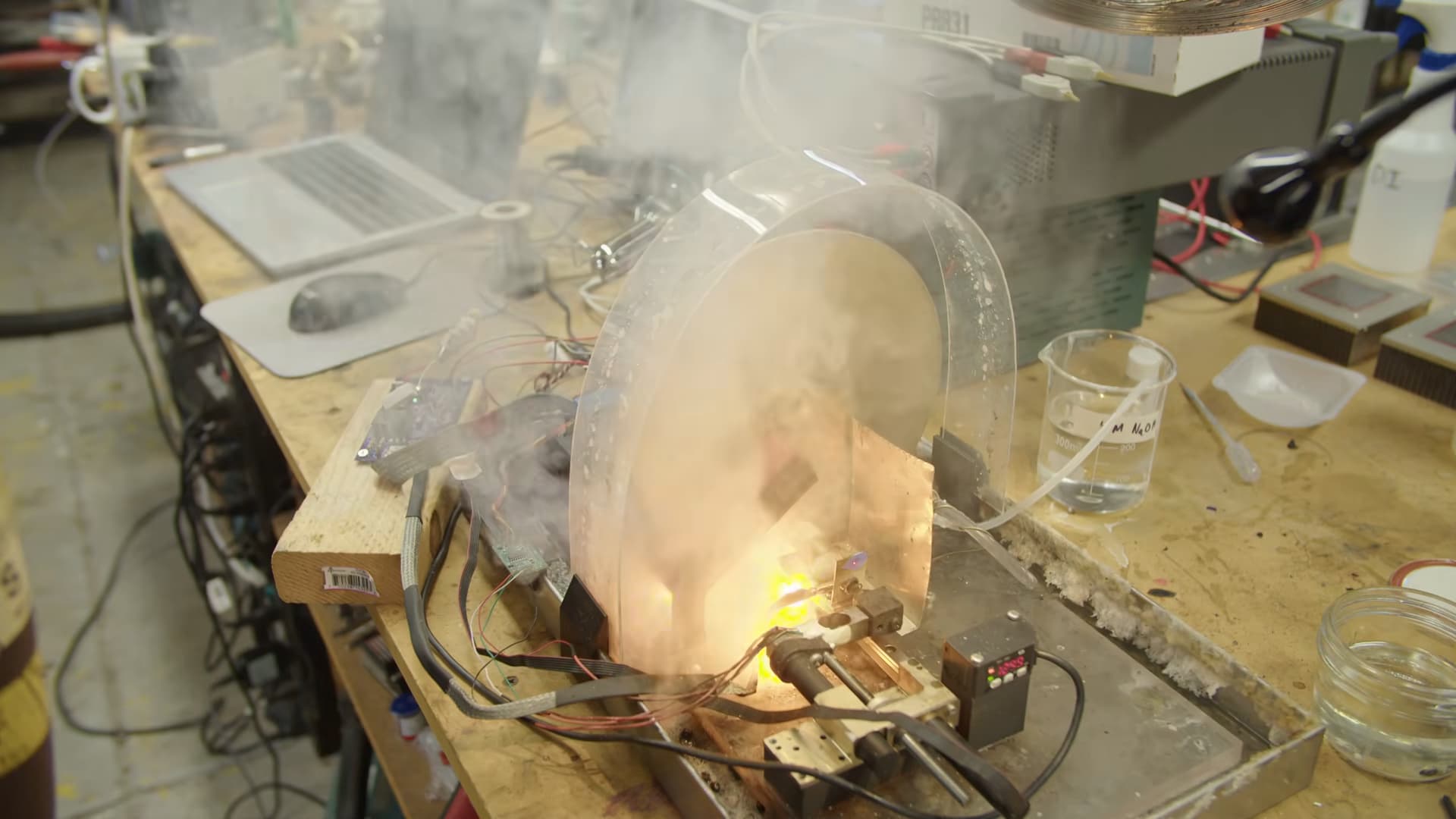
Applied Science built a working prototype of a 1970s sodium-water generator patent, and the core operating principle is this: draw enough electrical current and the sodium does not explode. Stop drawing current, and it does. The device works by positioning a sodium electrode nanometers from a spinning metal disk, with water flowing through the gap to complete the circuit.
The mechanical solutions required to make this function are where the article earns a full read. Stainless steel failed on conductivity, so the disk was nickel-plated. Slip rings failed on resistance, so the builder fabricated a custom liquid-metal contact from a gallium-indium-tin alloy. The sodium electrode itself must continuously advance as it depletes, a problem the original patent punted on with a vague reference to a spring and no specifications.
The patent's power output claims do not survive contact with reality, per the video results. No record exists of the original inventor ever building a physical unit. All design files are on GitHub under benkrasnow's sodium-water-reactor repository. Whether this is a dead end or a starting point depends on how much you trust a generator whose safety mode is maximum load.
[READ ORIGINAL →]