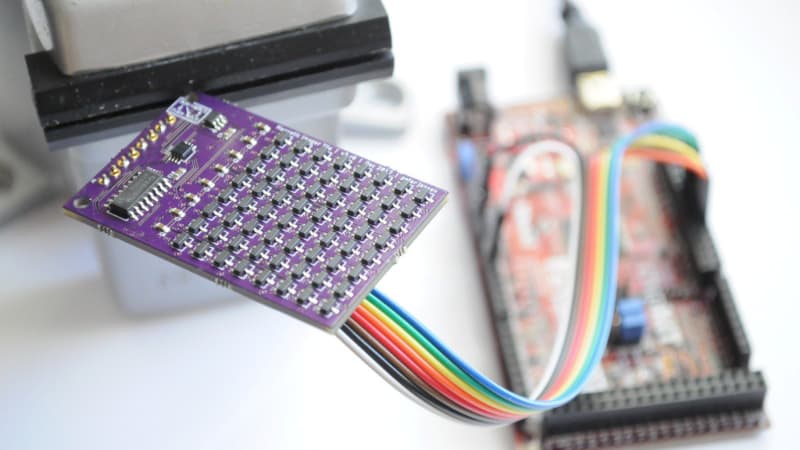
Stephen Cass built a magnetic gesture lock using an 8x8 array of 64 Hall-effect sensors, originally developed by Peter Jansen, read by a Teensy microcontroller. A magnetic stylus draws a trained unlock pattern over the sensor grid. A Celtic knotwork overlay on the box disguises the active sensing area, so the correct stroke path is not obvious to an observer.
The design has two real problems the original article works through honestly. The sensor covers a small physical area, making gesture reproduction unreliable. A dead battery means a permanently locked box, short of breaking it open. Wireless charging is one mitigation, but a simple external battery jack is the more practical call.
The piece is worth reading for the engineering tradeoffs Cass lays out and the open questions it raises: whether reed-switch-based magnetic combination locks could cut battery draw to near zero, and whether switchable permanent magnets could eliminate the battery requirement entirely. The full article and Jansen's magnetic imaging tile video are the actual payoff here.
[READ ORIGINAL →]