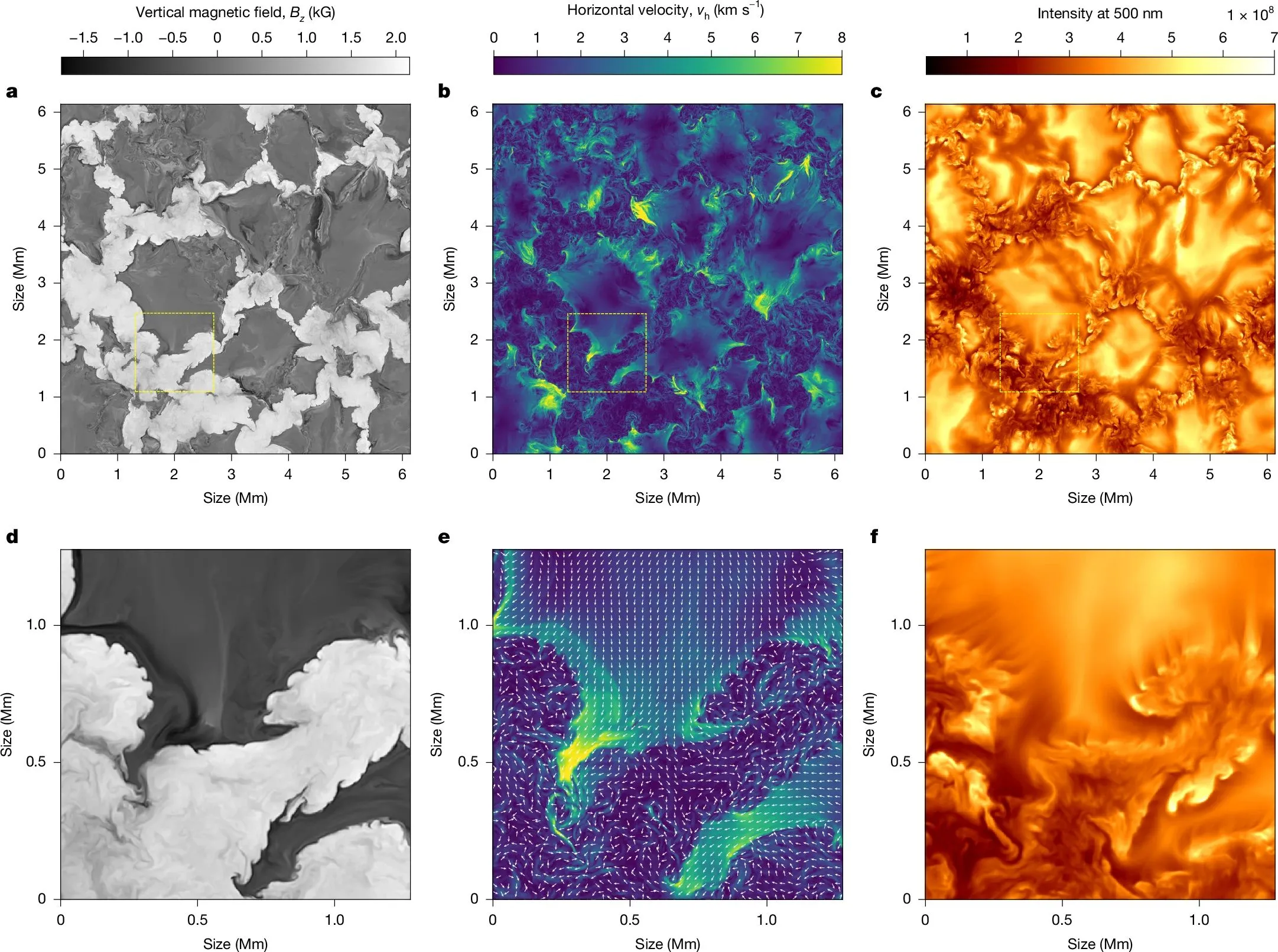
Kelvin-Helmholtz instabilities drive plasma transport in the Sun's photosphere. David Kuridze et al. published the finding in Nature, confirmed by direct observation using Hawaii's 4-meter Daniel K. Inouye Solar Telescope and validated through MURaM magnetoconvection simulations.
The photosphere is not a boiling liquid. It is pockets of plasma at different temperatures moving within magnetic and convective fields. The Kelvin-Helmholtz instability, a velocity-shear phenomenon also visible in Earth's atmospheric cloud formations, is what actually moves that plasma around, not simple convection alone.
The paper is worth reading in full because the MURaM simulation data gives a mechanistic picture of how magnetic field boundaries and plasma velocity differentials interact at the solar surface. That detail matters for anyone working on space weather modeling, fusion plasma research, or magnetohydrodynamics. The mechanism is now observed, not just theorized.
[READ ORIGINAL →]