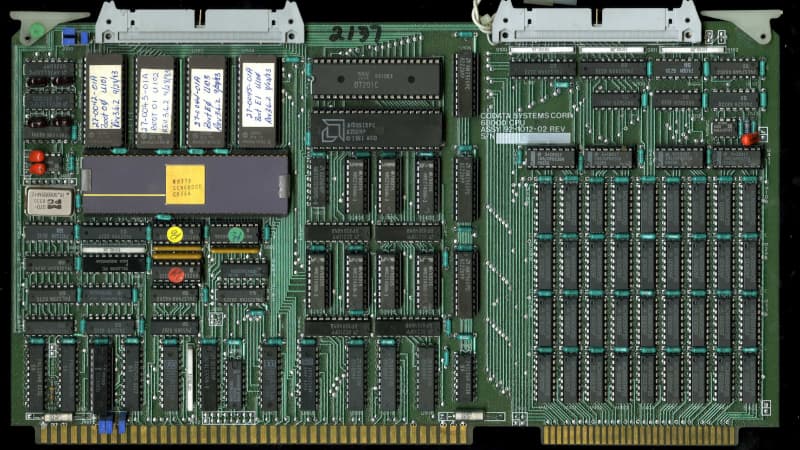
Andy Bechtolsheim's late-1970s Stanford graduate project, the Stanford University Network workstation, is the direct ancestor of the laser printer, the GPU, and the commercial router. Michael Engel made the case at Vintage Computing Festival Berlin 2026, and the lineage is harder to dismiss than it sounds.
The technical pivot point: the Motorola 68000 had no MMU, so Bechtolsheim implemented one externally using a bank of SRAM as the page table. That CPU board became the first Sun workstation. Silicon Graphics licensed the same board for its first machine, Imagen used it in early laser printers, and the routing software running on the Stanford prototype was folded directly into Cisco's first product.
The talk is worth watching in full because Engel traces each branch of the lineage with specific products and dates, not just broad claims. The IBM PC narrative dominates computing history, but this talk makes a credible argument that a single SRAM hack at Stanford shaped more of what you use daily than the 8088 ever did.
[READ ORIGINAL →]