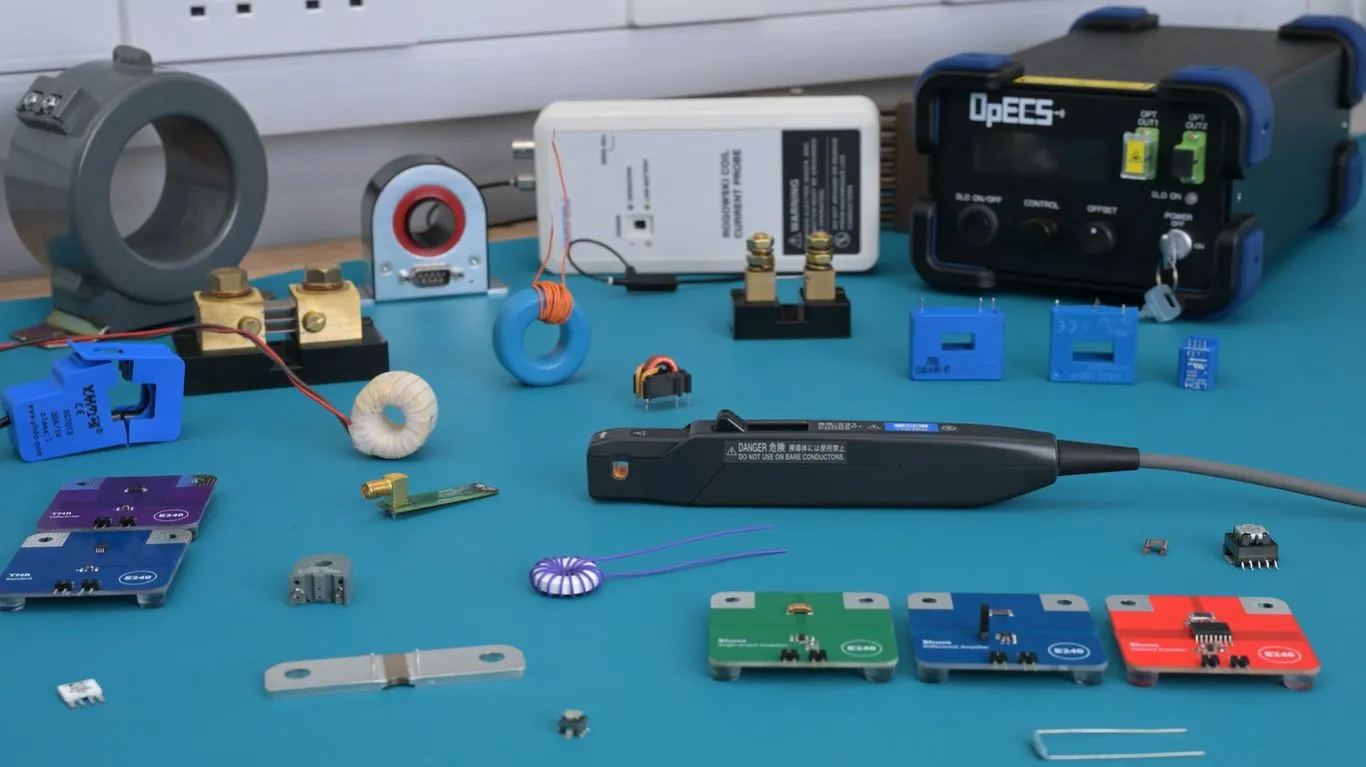
Measuring current without disrupting your circuit is an unsolved optimization problem with at least six hardware answers. ElectrArc240's video catalogs every major current sensor type in a single run: shunt resistors, transformer clamps, Hall-Effect sensors, TMR sensors, fluxgate sensors, and fiber-optic interferometers that exploit the Faraday effect to read phase shifts in transmitted light caused by a magnetic field.
The shunt resistor is the baseline: cheap, reliable, low-voltage, low-current, and physically present in your GPU right now limiting power draw until a modder removes it. From there the video climbs the complexity curve. Clamp meters use transformer-based AC flux sensing with no contact required. DC and high-current applications push you toward Hall-Effect or fluxgate designs. The fiber-optic interferometer sits at the top, delivering the highest resolution at the highest cost.
The value of the original video is not the conclusion but the middle: each sensor type is physically demonstrated, with specific failure modes and application gotchas addressed per type. If you have ever grabbed the wrong sensor for a job or wondered why your shunt solution was introducing noise, the per-type breakdown is where you want to spend your time.
[READ ORIGINAL →]