Anthropic's Mythos model found thousands of critical vulnerabilities that survived decades of human security review, using nothing more than a prompt. That is not augmentation. That is displacement. Cybersecurity researchers are the handloom weavers of 2025, and Anthropic's Project Glasswing exists partly because the compute cost of running Mythos at scale demanded a safety valve. The John Henry moment for infosec has already passed.
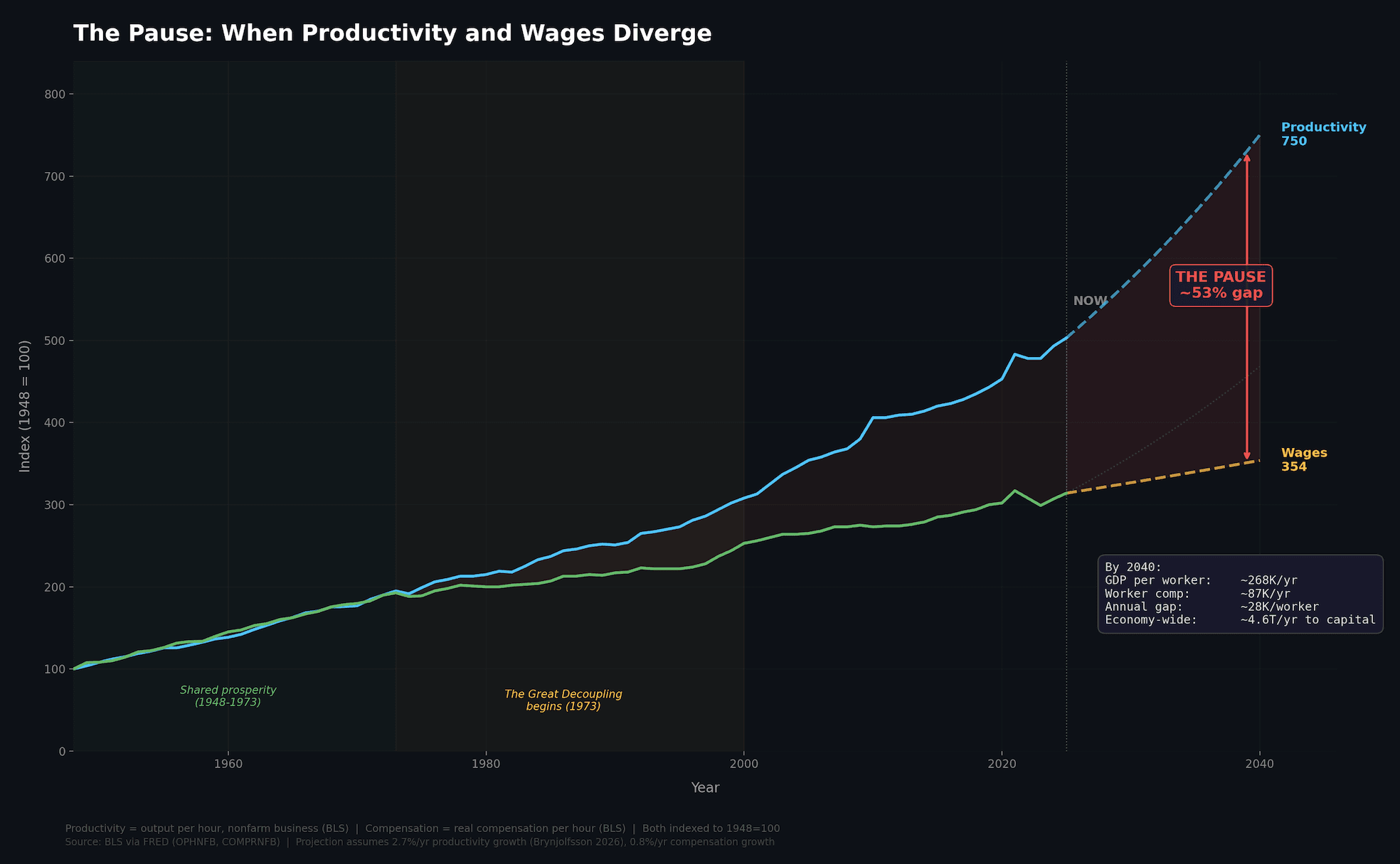
The framework that matters here is Engels' Pause, a term coined by economic historian Robert C. Allen to describe 1780 to 1840, when British per-capita GDP grew 46% while working-class wages rose only 12%, per estimates from economists Charles Harley, Nicholas Crafts, and Charles Feinstein. The mechanism was specific: high-earning skilled artisans, handloom weavers commanding a 100% wage premium over general workers, were the first targets. Their premium made displacement economically urgent. Capital captured the gains, reinvested into more machines, and the skilled middle class absorbed the damage while unskilled wages held.
The original piece argues we are entering a structural repeat of that pattern, where the highest-paid knowledge workers face the steepest displacement first, and aggregate productivity statistics will mask the wage stagnation underneath. The historical parallel is detailed enough to be worth reading in full, specifically the mechanics of how industrialist profits were recycled into further automation rather than wages, and what that distribution pattern implies for AI-era corporate behavior. If 'Engels' Pause' becomes the dominant economic frame for the next decade, this is where you saw it named.
[READ ORIGINAL →]