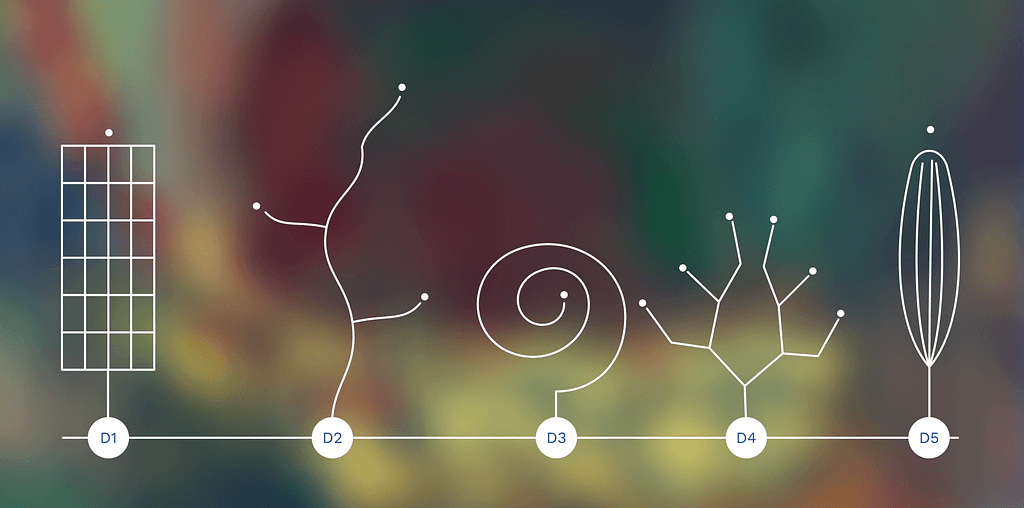
Mastery of AI tools does not converge. It diverges. That is the central finding from a six-month co-learning series run by Salesforce Service UX, covering 46 designers across the US, India, and Israel, spanning tools including NotebookLM, Cursor, Figma Make, Claude project spaces, and Wispr Flow. The series ran two 30-minute sessions per month, designed by senior product designer Ningdan Zhang and the author, built on a single hypothesis: structured peer learning beats top-down training decks.
The reason this matters is architectural. Traditional software like Figma or AutoCAD is deterministic. You learn where the buttons are, mastery converges, and a training deck works. AI tools have no equivalent affordances. Designer and anthropologist Maggie Appleton described this in her 2023 talk 'Squish Meets Structure' as the magic-input box: no knobs, no door handles, cognitive load offloaded entirely to the user. What you bring to the tool, your mental models, your prompting habits, your custom configuration files, becomes the tool. The same model in the hands of 46 different designers produces 46 different practices. The series made this visible in the first session, when UX researcher Fatimah Richmond demonstrated her NotebookLM workflow for surfacing insights from years of archived Salesforce research, and called it 'the intelligent notebook,' a name she invented herself from her own vantage point.
The article is worth reading in full not for its conclusion but for what it documents in motion: how the format of the sessions exposed the nature of the tools, what Richmond's session on October 1st 2025 revealed about peer modeling versus expert instruction, and how the team navigated the real anxiety underneath all of it, the question of which jobs exist in two years. The reframe the authors land on, mastery as personal, divergent, and never finished, is a direct challenge to how most organizations are currently running AI enablement programs.
[READ ORIGINAL →]