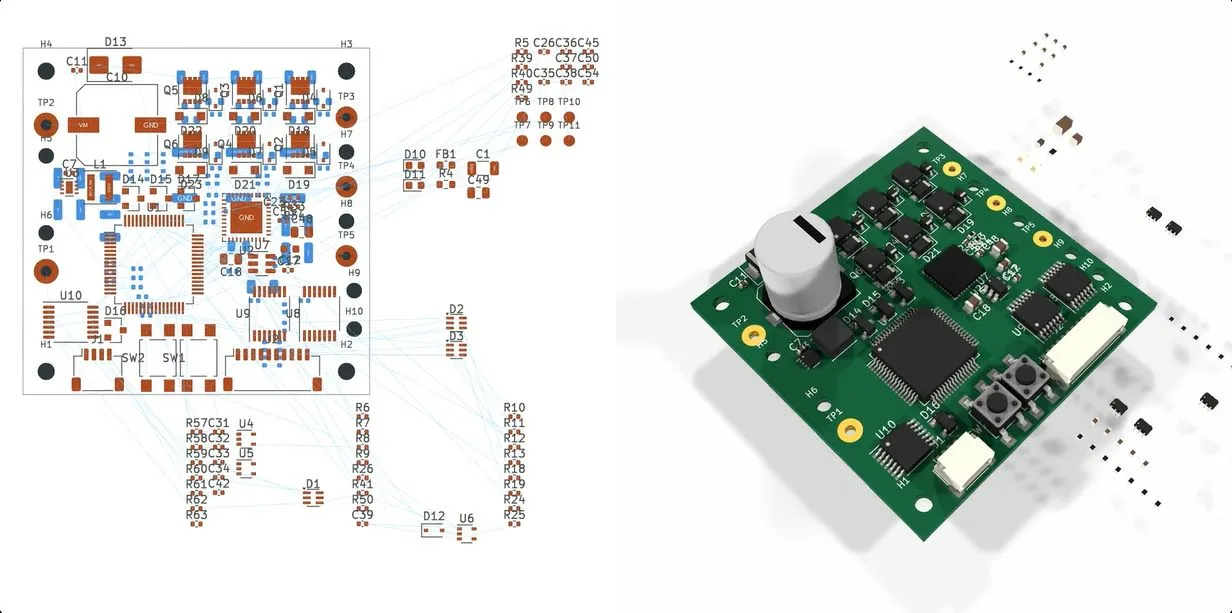
GPT-6 Astra scored 69.3% (plus or minus 10%) on EEBench, an electrical engineering agent benchmark built by the developers of Atopile, a code-based PCB design tool targeting AI workflows. OpenAI claims the model can take a schematic and output a fully routed KiCad PCB ready for fabrication. EEBench tested that claim directly, and the number tells you what marketing copy will not.
The benchmark context matters. EEBench treats schematic-to-routed-PCB as one step in a larger hardware engineering pipeline, not the finish line. GPT-6 Astra lands roughly level with Claude Opus 5, but runs cheaper and faster. Back in 2024, the same class of LLMs performed well enough that Hackaday concluded you were better off doing board design by hand. Two years later, 69.3% is progress, not a replacement.
The full EEBench post is worth reading because it details exactly where the model fails, not just where it clears the bar. Production boards require edge-case handling, multi-engineer validation, and rigorous pre-run testing. Vibe-coding a one-off prototype is a legitimate shortcut. Signing off on a production run is not the same problem, and the methodology page at eebench.org makes that boundary explicit.
[READ ORIGINAL →]