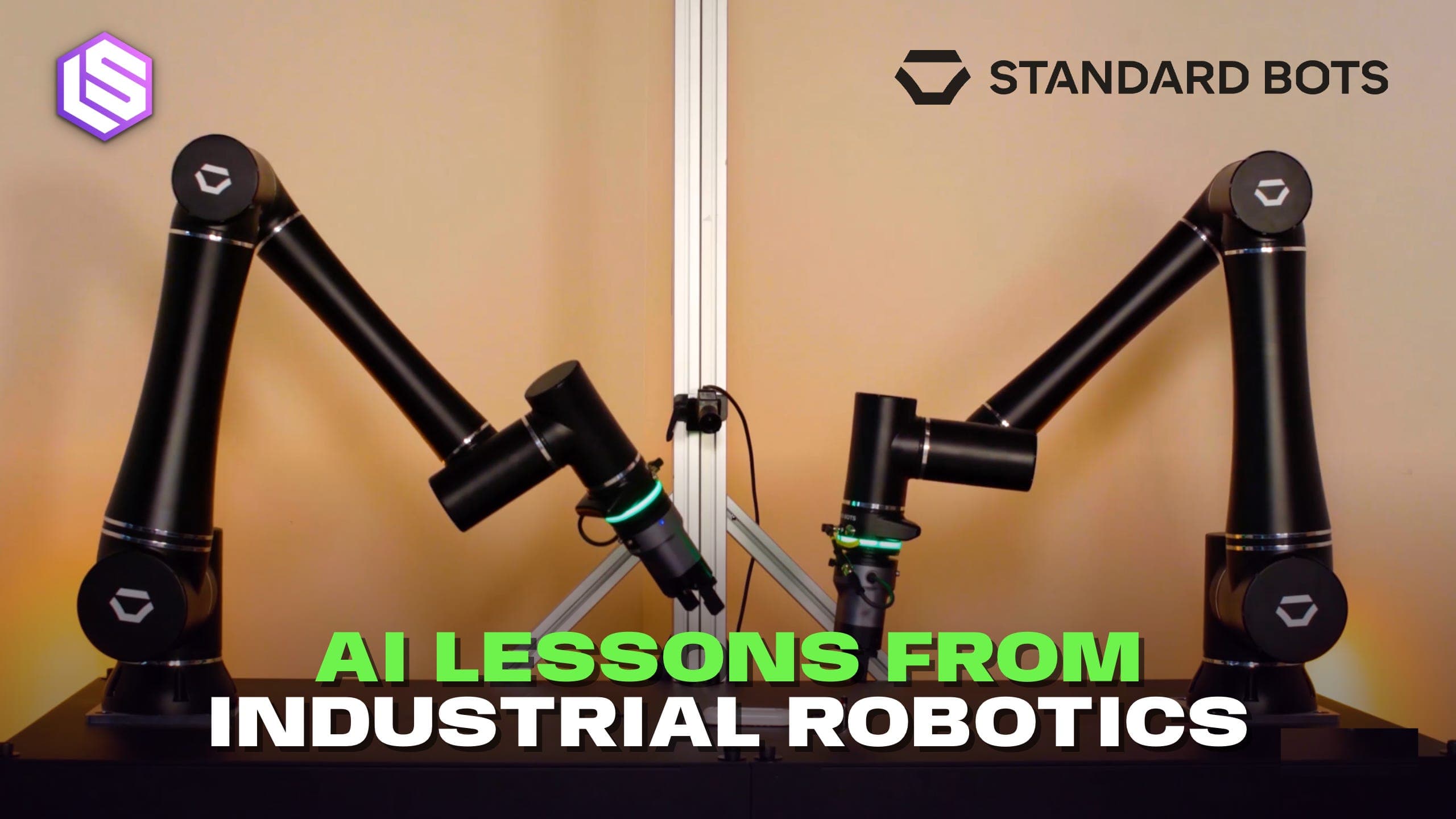
Standard Bots, which counts NASA, Amazon, and Lockheed Martin as customers, raised $200 million at a $1 billion valuation in a Series C led by General Catalyst and RoboStrategy. The company calls itself America's largest AI-native industrial robot manufacturer, building arms for machine tending, welding, and assembly, not humanoids. In 2026, that distinction matters: industrial robots are already inside production environments where humanoids are still a pitch deck.
CEO Evan Beard and Head of AI Leif Jentoft walked Latent Space through the technical architecture. The base model sits in the low billions of parameters, small by frontier standards, and customers adapt it through demonstrations and fine-tuning. Jentoft's core claim: data quality beats data volume, and in-situ interventions can resolve edge cases with just a few dozen targeted examples. A zero-shot perception system handles machine tending without task-specific training.
The full interview is worth reading for the specifics on how Standard Bots structures its shared base model, why its market access gives it a compounding data advantage over competitors, and what Jentoft means when he says targeted data can outperform raw compute. If you are building any kind of robotics AI stack, the reasoning behind their model size choices alone justifies the read.
[READ ORIGINAL →]