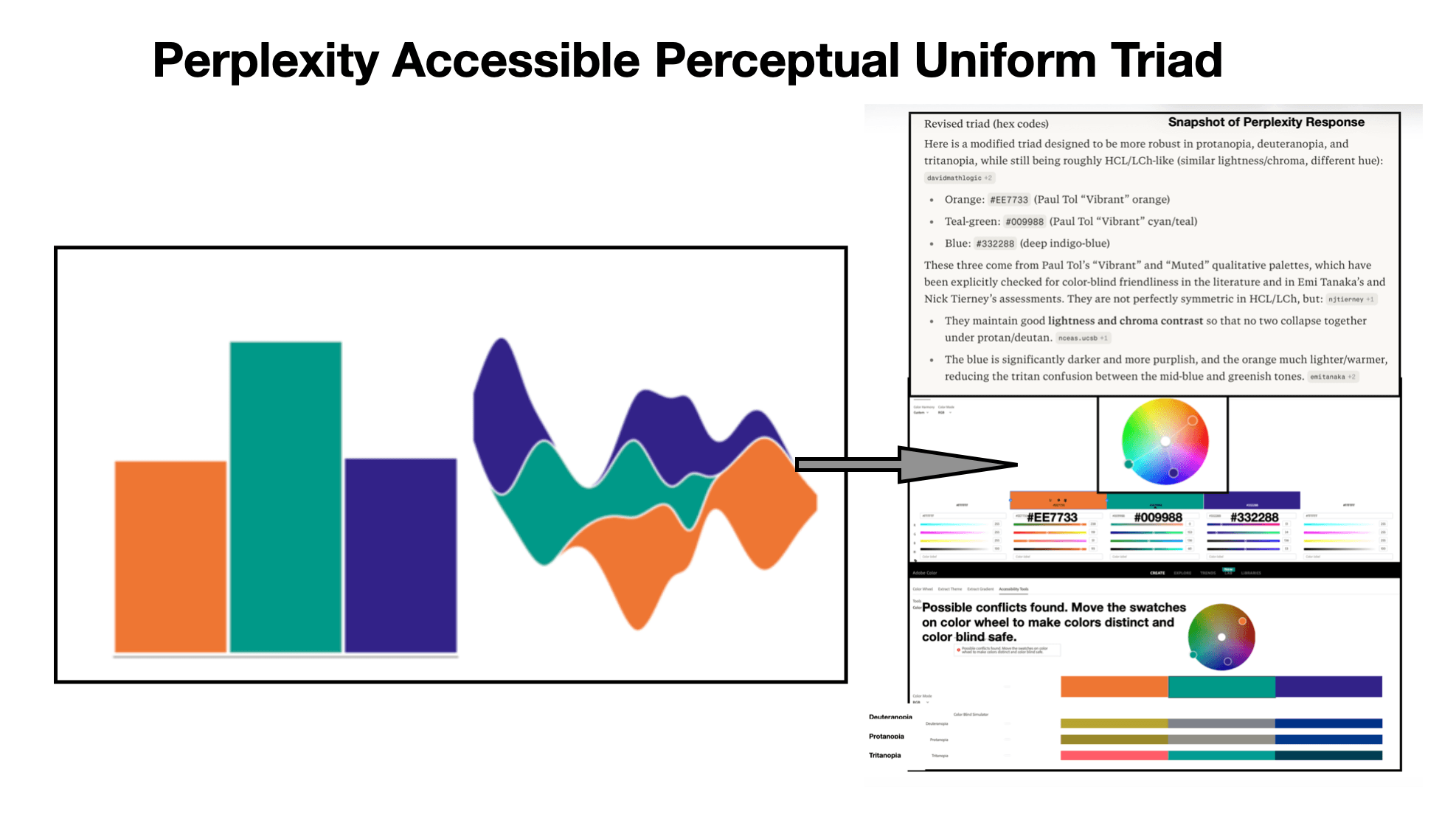
A designer used Perplexity to construct a perceptually uniform color triad optimized for accessibility, and the AI struggled with the task in ways that reveal real limits in how large language models handle color science.
The gap between what GenAI confidently outputs and what color theory actually requires is the core tension here. Perceptual uniformity, the property that makes equal numerical distances in a color space look equally different to the human eye, is not a concept most models handle with precision. Watching Perplexity navigate CIELAB, hue angles, and contrast ratios exposes where the model reasons well and where it hallucinates structure.
Read the full piece for the methodology, not just the verdict. The author documents specific prompts, the model's responses, and where human correction was required, making this a practical case study in AI-assisted design work rather than a general take on GenAI capability.
[READ ORIGINAL →]