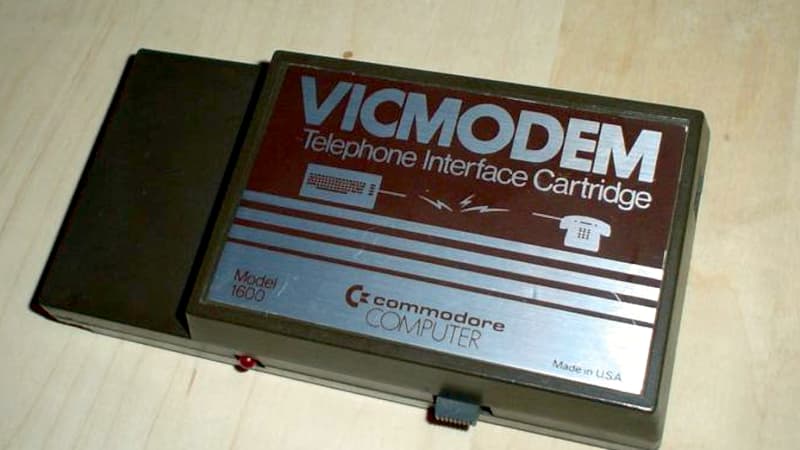
The Commodore 1600 VICModem, released in 1982, was the first phone modem to retail under $100 at a time when competing 300 baud units cost at least $200 and a 1200 baud modem ran $600 or more. Commodore outsourced the design to Anchor Automation, which built it around a Motorola MC14412 modem-on-a-chip, theoretically capable of 600 baud but deliberately rated at 300. The cost came down through deliberate removal of features: no auto-dial, a manual originate/answer switch, and a dependency on the user physically swapping the handset cord into the modem after dialing.
The handset dependency created an immediate problem. Commodore sourced bundled phones in Canada only to discover the handsets were hard-wired, making them incompatible with the modem. Worse, modular handset jacks were illegal in Canada at the time, so even the right phones would have violated local regulations. The fix was the VIC-1605, a Y-cable splitter using RJ-11 and RJ-9 connectors that let the phone and modem share a single wall jack.
The full write-up by Dave Farquhar is worth reading not for the nostalgia but for the engineering logic: every cost-cutting decision is traceable, every corner cut is documented, and the Canadian phone fiasco is a clean case study in hardware launch failures caused by regional compliance gaps. The modem worked. The supply chain did not.
[READ ORIGINAL →]